

Struggling with oily skin that never stays matte? You cleanse your face, and within two hours your T-zone is shining again. Makeup slides off, pores look larger, and breakouts appear overnight — even when you’re “doing everything right.”
For years, oily skin was treated as something to dry out using harsh cleansers, alcohol toners, and aggressive exfoliation. Science now shows this approach actually makes oiliness worse.
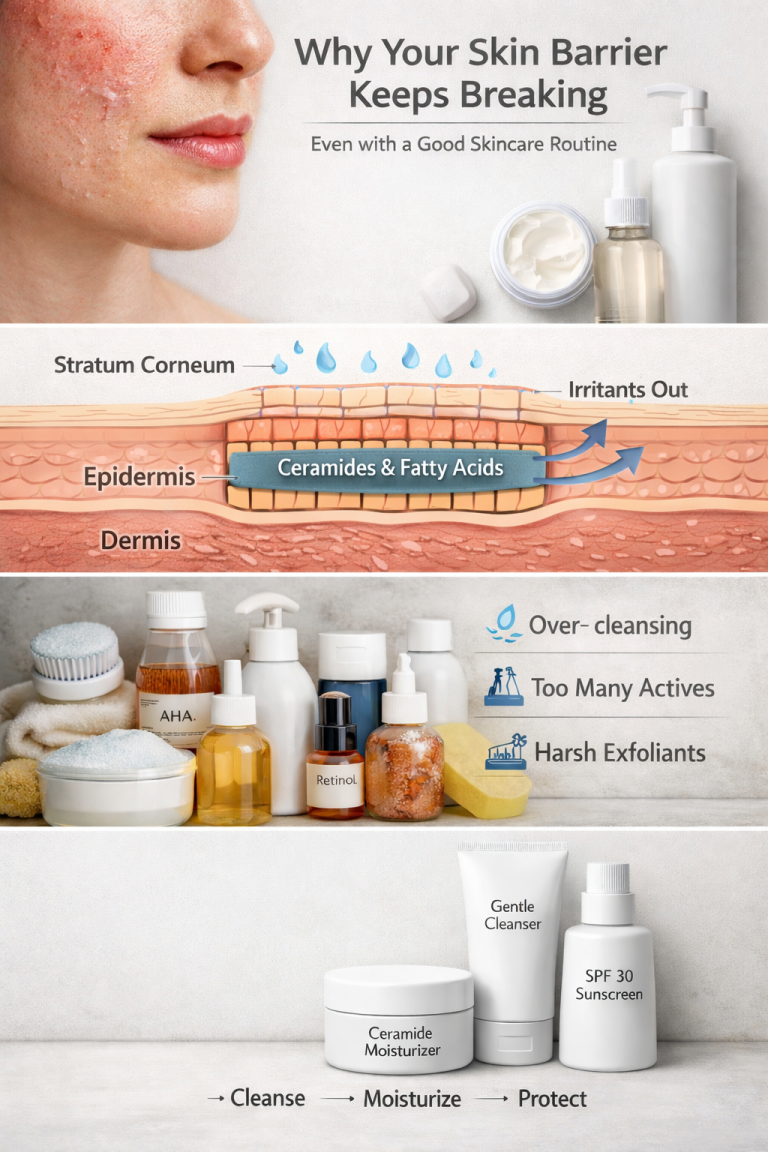
When the skin barrier is damaged, your skin enters defense mode, producing even more oil to compensate.
That’s where Niacinamide (Vitamin B3) changes everything.

Quick Answer: Does Niacinamide Help With Oily Skin?
Yes. Niacinamide is one of the best ingredients for oily skin. It regulates sebum production, minimizes enlarged pores, and repairs the skin barrier without stripping moisture. Unlike harsh oil-control products, it balances oil at the source — keeping skin calm, clear, and healthy.
Why Oily Skin Needs Balance — Not Punishment

Oily skin isn’t a hygiene issue; it’s a biological response.
Your skin produces sebum to:
- Prevent moisture loss
- Protect against bacteria
- Maintain barrier integrity
When you over-cleanse or skip moisturizer, the barrier weakens. Your sebaceous glands respond by producing more oil, not less.
This is why oily skin often feels greasy and dehydrated at the same time.
To truly fix oiliness, you must:
- Repair the skin barrier
- Regulate sebum flow
Niacinamide’s broad range of benefits makes it uniquely qualified for this task. By fostering a healthy environment, it signals the skin to stop overproducing oil.
How Niacinamide Works Inside the Skin (The Science)

Niacinamide is a water-soluble form of Vitamin B3, essential for cellular repair. Because the body doesn’t store it efficiently, topical application is crucial.
Inside skin cells, Niacinamide is a precursor to NAD and NADP, coenzymes responsible for:
- Cellular energy production
- DNA repair
- Barrier lipid synthesis
Niacinamide acts as a smart oil regulator.
It doesn’t shut down oil production — it optimizes it to a healthy level.
Top 8 Science-Backed Benefits of Niacinamide for Oily Skin

1. Regulates Sebum Without Drying
Clinical research published in PubMed demonstrates that 2% Niacinamide significantly reduces sebum excretion within 4 weeks. Unlike mattifying powders, it works at the gland level — delivering oil control without tightness or dehydration.
2. Minimizes the Appearance of Enlarged Pores
Pores look larger when they are stretched by excess oil and debris. According to experts at Healthline
, Niacinamide helps keep the skin smooth and clear by preventing oil from getting trapped. As the oil production stabilizes, the pore lining strengthens, and the pores return to their natural size.
3. Repairs the Skin Barrier (Ceramide Boost)
Niacinamide increases ceramide production, the lipids that hold skin cells together.
For oily skin, a stronger barrier means:
- Less oil overproduction
- Fewer breakouts
- Better tolerance to active ingredients
4. Calms Acne-Related Inflammation
Niacinamide is a powerful anti-inflammatory. It reduces redness, swelling, and irritation without the harsh side effects associated with benzoyl peroxide or strong acids.
This makes it ideal for adult acne and hormonal oiliness.
5. Fades Post-Acne Marks (PIE & PIH)
Niacinamide blocks melanin transfer within skin cells, helping fade:
- Dark spots
- Red post-acne marks
- Uneven tone
This is especially useful for oily skin types prone to frequent breakouts.
6. Prevents Oxidized Oil (Lipid Peroxidation)
Oily skin is prone to lipid peroxidation, where sebum oxidizes and clogs pores.
Niacinamide’s antioxidant action keeps sebum stable and non-comedogenic, reducing blackheads and whiteheads.
7. Protects Against Pollution & Environmental Stress
Urban pollution increases inflammation and congestion. Niacinamide strengthens the skin’s outer defense and neutralizes free radicals — crucial for maintaining clarity in high-stress environments.
8. Improves Elasticity Around Pores
Niacinamide supports collagen production, helping maintain firmness around pores and preventing the “sagging pore” appearance that mimics fine lines.
Niacinamide vs Other Oily-Skin Ingredients

Niacinamide vs Salicylic Acid
- Salicylic acid clears oil inside the pore
- Niacinamide prevents overproduction at the source
Best used together, not as substitutes.
Niacinamide vs Hyaluronic Acid
- Hyaluronic Acid hydrates
- Niacinamide strengthens the barrier to retain hydration
They complement each other perfectly.
Niacinamide vs Retinol
- Retinol increases cell turnover
- Niacinamide reduces irritation and strengthens tolerance
This combination is excellent for acne + anti-aging routines.
The Golden Rule: Niacinamide Concentration
More is not better.
- 2%–5% (Ideal Range): Clinically proven, effective, low irritation
- 10%+: Can cause flushing, breakouts, or sensitivity in some people
If you have oily or sensitive skin, 5% is the sweet spot.
Common Myths About Niacinamide for Oily Skin
Myth 1: Niacinamide stops oil production completely
False. Your skin still needs oil. Niacinamide restores balance.
Myth 2: I don’t need moisturizer if I use Niacinamide
False. Skipping moisturizer leads to dehydration — and more oil.
How to Use Niacinamide for Maximum Oil Control

Morning & Night Routine
- Cleanse: Gentle, pH-balanced cleanser
- Niacinamide Serum: 2–3 drops on slightly damp skin
- Moisturize: Lightweight, oil-free gel or lotion
- SPF (AM): Broad-spectrum SPF 30+
Many modern sunscreens already include Niacinamide for a matte finish.
Frequently Asked Questions (SEO & Schema Ready)
Does Niacinamide cause purging for oily skin?
No. Niacinamide does not increase cell turnover. Breakouts usually occur due to high concentrations or incompatible formulas.
How long does Niacinamide take to control oily skin?
Hydration and redness improve within 2 weeks. Oil regulation and pore refinement typically take 8–12 weeks.
Can Niacinamide be used with Vitamin C?
Yes. Modern formulations allow both to work together for improved brightening and antioxidant protection.
Can I skip moisturizer if I use Niacinamide serum?
No. Niacinamide treats the skin but does not seal moisture. Always follow with a lightweight moisturizer.
Is Niacinamide safe for daily use?
Yes. It is stable, non-comedogenic, and safe for morning and night use.
Final Verdict: Is Niacinamide Worth It for Oily Skin?
Absolutely.
If you want oily skin that feels balanced, calm, and resilient — not stripped and reactive — Niacinamide is one of the most effective ingredients available.
By shifting your approach from aggressive oil removal to biological balance, you allow your skin to function the way it was designed to.
Next Step
Check your current skincare labels.
If your routine lacks Niacinamide, add a 5% serum and track changes for 30 days.
Consistency — not aggression — is the secret to clear, matte skin.

Tamanna Zaman is an English graduate and self-care researcher at CareByScience, creating research-driven content on skincare, haircare, and wellness. By analyzing clinical studies and verified expert insights, she provides actionable, trustworthy routines that help readers achieve healthier skin, stronger hair, and overall wellbeing.



Wow! Never thought of it.
Exactly