
If you are wondering about the correct Vitamin D dosage daily , you are not alone. Vitamin D is one of the most misunderstood nutrients in modern health. While many people are aware that vitamin D supports bone strength and immunity, few truly understand the specific amount they need for their age and lifestyle.
As a result, some people take too little and remain deficient for years. Meanwhile, others unknowingly take excessive doses, assuming “more is better.” Understanding the correct vitamin D dosage per day is essential—not just for treating deficiency, but also for maintaining long-term health safely. In this guide, we explore science-based intake levels, safe upper limits, and the crucial role of co-factors.
Internal Discovery: Before diving into specific amounts, it is helpful to recognize whether you are already deficient in this nutrient. Check out our guide on Vitamin D Deficiency Symptoms to see if your body is sending warning signs.
What Is Vitamin D and How Does It Work?
Vitamin D is a fat-soluble vitamin that behaves more like a hormone. Once it enters your body—either through sunlight, food, or supplements—it gets converted into an active form that influences hundreds of biological functions.
According to research published by the National Institutes of Health (NIH), your Vitamin D dosage directly impacts:
- Calcium Absorption: It helps the gut absorb calcium and phosphorus.
- Bone Integrity: It strengthens bones and prevents conditions like rickets.
- Immune Defense: It supports the body’s natural resistance against pathogens.
Factors That Influence Your Vitamin D Dosage Needs
A “standard” Vitamin D dosage may not work for everyone because several biological and environmental factors change how your body processes this nutrient.
- Skin Tone and Melanin: Melanin acts as a natural sunscreen. People with darker skin tones require longer sun exposure or a higher vitamin D dosage for deficiency to reach the same blood levels as those with lighter skin.
- Geographical Location: If you live in northern latitudes, your body cannot produce Vitamin D from the sun during the winter months. This is why a seasonal adjustment in your daily vitamin d intake is often recommended.
- Body Weight (BMI): Since Vitamin D is fat-soluble, it can get “trapped” in fat tissue. Individuals with a higher BMI may need a vitamin D dosage for adults that is 2 to 3 times higher than average to maintain healthy levels.
What Happens When Vitamin D Dosage Is Too Low?
When your daily intake remains insufficient, your body slowly starts malfunctioning. At first, symptoms appear subtle; however, over time, the damage becomes more noticeable.
Low vitamin D levels may lead to:
- Chronic fatigue and low energy.
- Weak immunity and frequent infections.
- Bone pain, stiffness, or lower back aches.
- Muscle cramps and hair thinning.
Vitamin D Dosage Chart by Age (Science-Based)
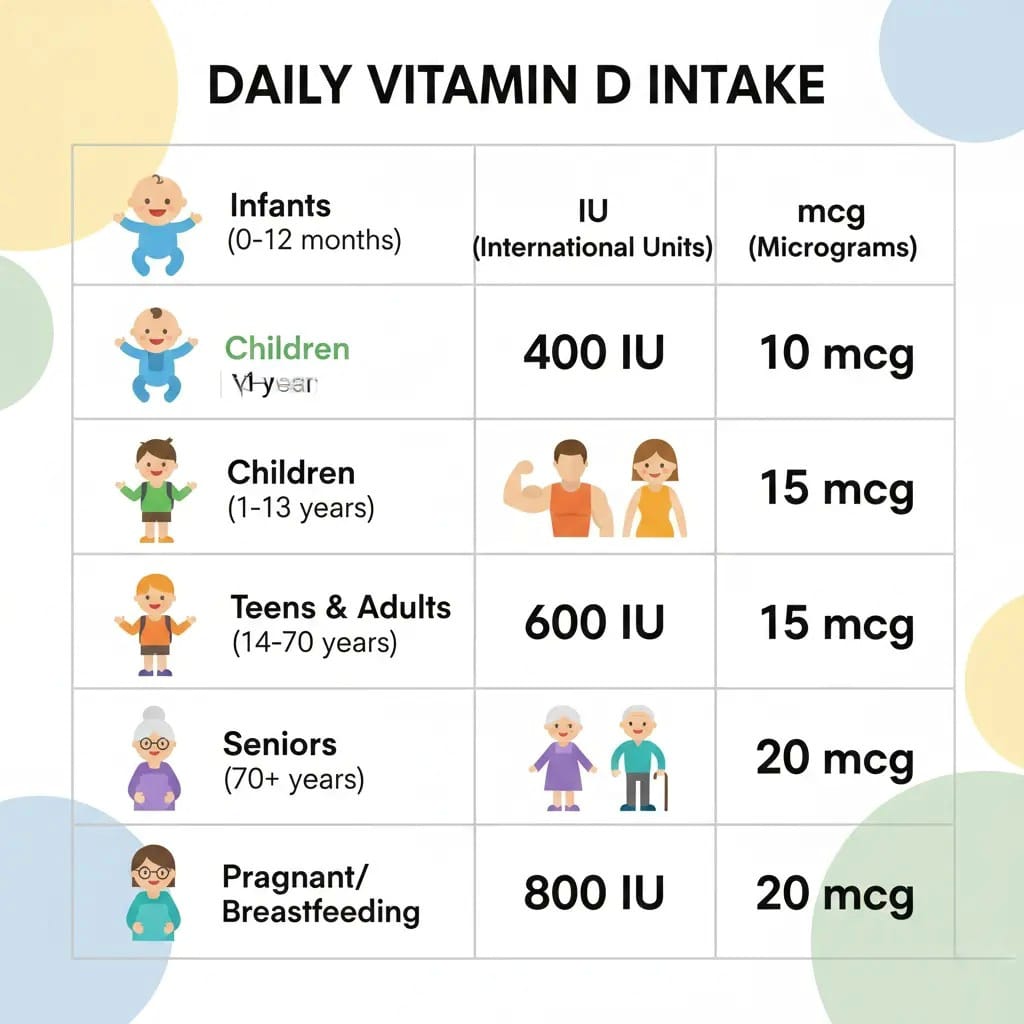
Establishing the right Vitamin D dosage depends heavily on age. Here is a clear, medically accepted chart:
| Age Group | Recommended Daily Intake (RDA) | Safe Upper Limit |
| 0–12 months | 400 IU (10 mcg) | 1,000–1,500 IU |
| 1–13 years | 600 IU (15 mcg) | 2,500–4,000 IU |
| 14–70 years | 600 IU (15 mcg) | 4,000 IU |
| 70+ years | 800 IU (20 mcg) | 4,000 IU |
| Pregnant / Lactating | 600 IU (15 mcg) | 4,000 IU |
Vitamin D Dosage for Deficiency (Adults)
If a blood test confirms vitamin D deficiency in adults (levels below 20 ng/mL), diet and sunlight alone are usually not enough to fix the gap. In such cases, medical professionals often recommend a higher Vitamin D dosage temporarily:
- Loading Dose: 2,000–4,000 IU daily (or higher weekly doses like 40,000 IU) for 8–12 weeks.
- Maintenance: Shifting to 1,000–2,000 IU daily once levels normalize.
- Follow-up: Testing after 3 months to ensure the vitamin D supplementation guide is working.
Vitamin D Dosage for Women and Men
Women are particularly vulnerable to deficiency due to hormonal changes and bone density concerns. An adequate vitamin D dosage for women helps protect bone mass after age 30 and reduces hair thinning.
For men, a proper vitamin D dosage for men supports testosterone regulation and muscle recovery. In most cases, a maintenance dose of 1,000–2,000 IU daily is effective for both genders.
The Synergy: Why Magnesium and Vitamin K2 are Non-Negotiable
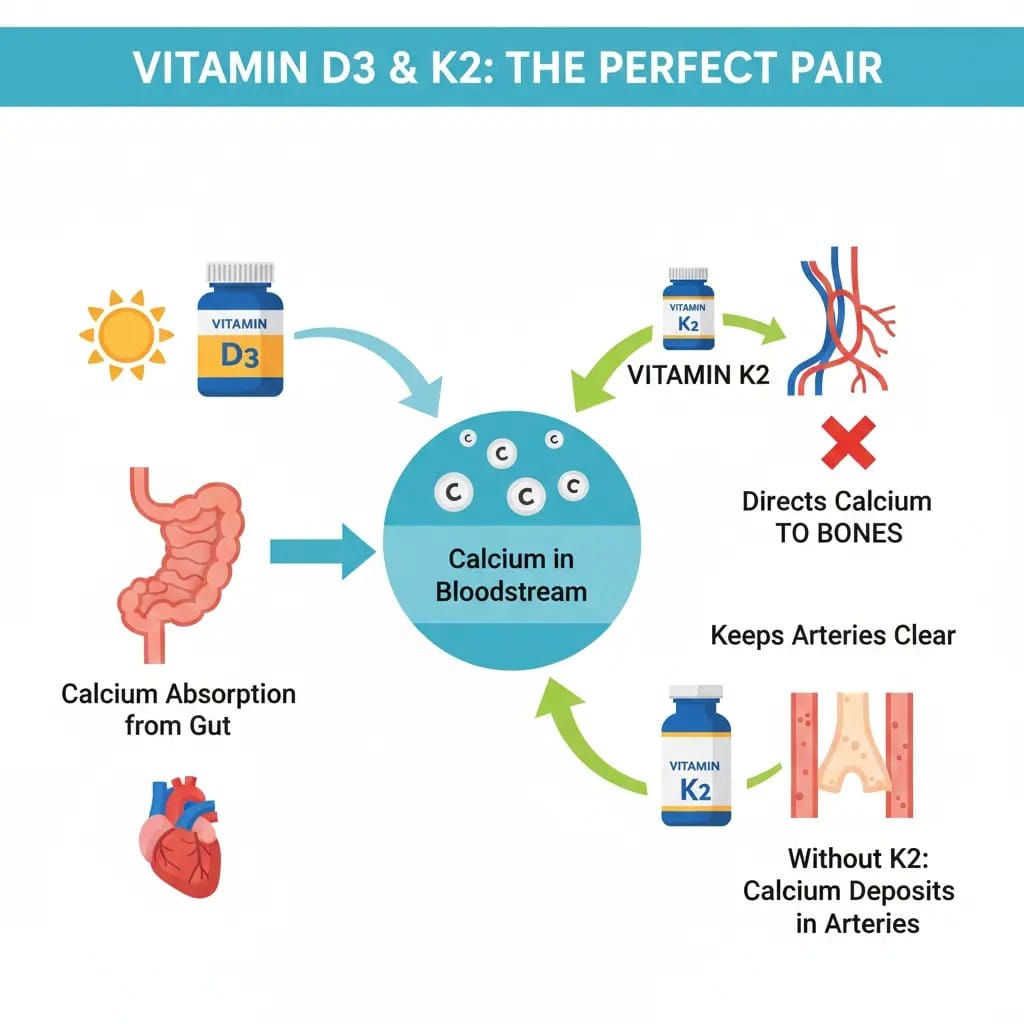
Taking a high Vitamin D dosage without balancing other minerals can lead to health complications. To ensure maximum safety and absorption, you must consider these two essential co-factors:
The Magnesium Connection
The enzymes that metabolize Vitamin D require Magnesium. If you are deficient in Magnesium, your Vitamin D supplement will remain stored and inactive. To avoid this, ensure your diet includes magnesium-rich foods like nuts and leafy greens while following your daily vitamin D intake.
The Vitamin K2 “Traffic Cop”
When you increase your daily vitamin D3 dosage, calcium absorption spikes. Vitamin K2 acts like a traffic cop, directing calcium into your bones and teeth while keeping it out of your arteries. This synergy is crucial for preventing “arterial calcification” (calcium buildup in blood vessels).
Best Time to Take Vitamin D for Maximum Absorption

To get the most out of your Vitamin D dosage, timing and food intake matter significantly:
- Take it with a meal: Since it is fat-soluble, consume your supplement with healthy fats (olive oil, eggs, or nuts).
- Morning or Midday: This mimics natural sun exposure and may prevent sleep interference.
- Combine with Vitamin K2: While Vitamin D absorbs calcium, K2 directs it to the bones and away from your arteries.
Can You Take Too Much Vitamin D? (Toxicity)
Yes. While rare, toxicity is a real risk if you exceed 10,000 IU daily for several months without testing. This is why the safe upper limit of 4,000 IU daily is recommended for the general public unless prescribed otherwise by a doctor.
Frequently Asked Questions (FAQ)
Q1: How much Vitamin D dosage should I take daily?
Most healthy adults benefit from 1,000–2,000 IU daily as a maintenance dose.
Q2: How long does it take to fix a deficiency?
It typically takes 3 to 6 months of consistent supplementation to see a significant rise in blood levels.
Q3: Can I get enough Vitamin D from food?
No. Food provides only about 10% of your daily needs. Sunlight and supplements are the primary sources.
Final Thoughts
The right Vitamin D dosage is not a guessing game; it is a precision-based health decision. By understanding your needs based on age and current levels, you can transform your wellness journey. Commit to a consistent routine, and your body will reward you with stronger bones and a more resilient immune system.

Tamanna Zaman is an English graduate and self-care researcher at CareByScience, creating research-driven content on skincare, haircare, and wellness. By analyzing clinical studies and verified expert insights, she provides actionable, trustworthy routines that help readers achieve healthier skin, stronger hair, and overall wellbeing.