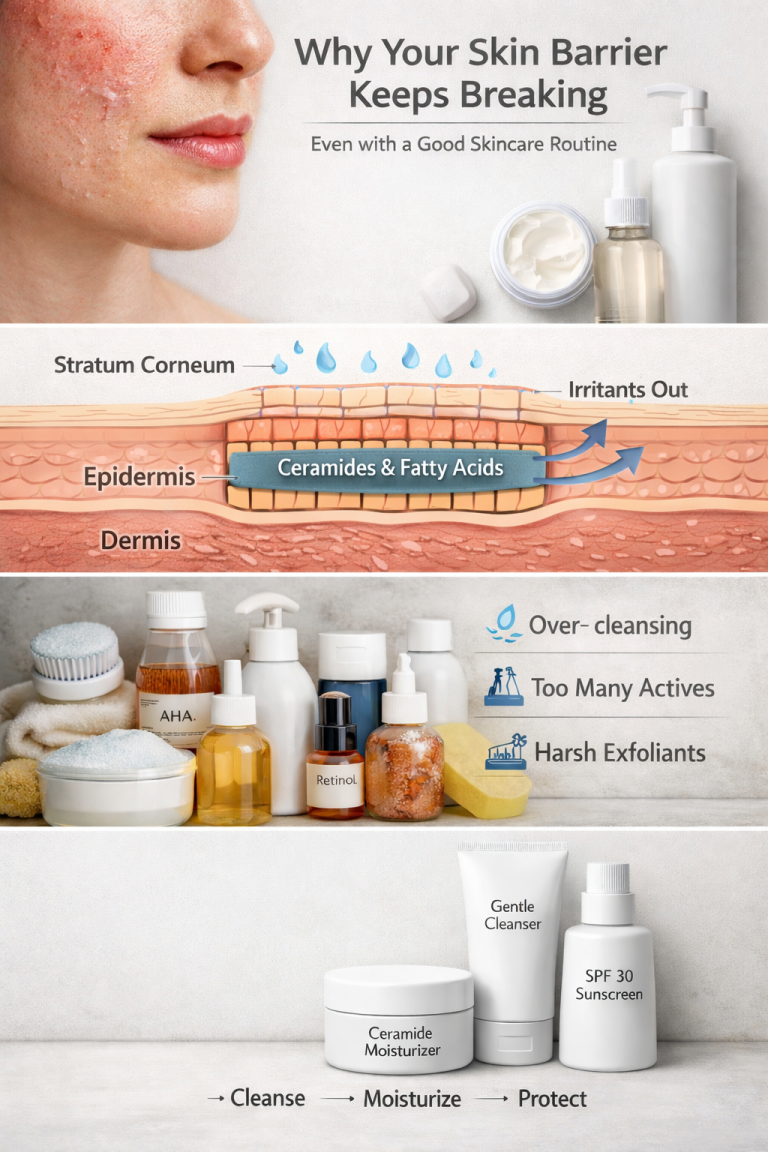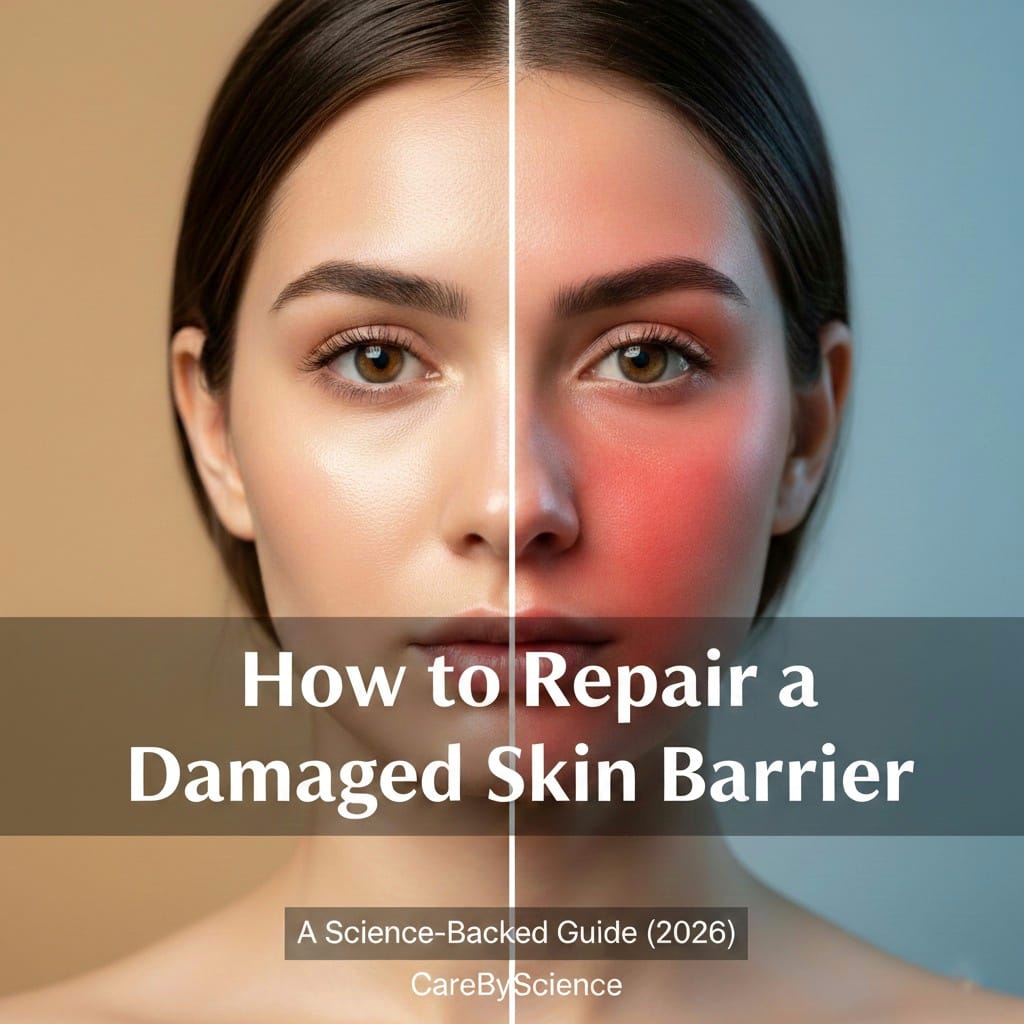
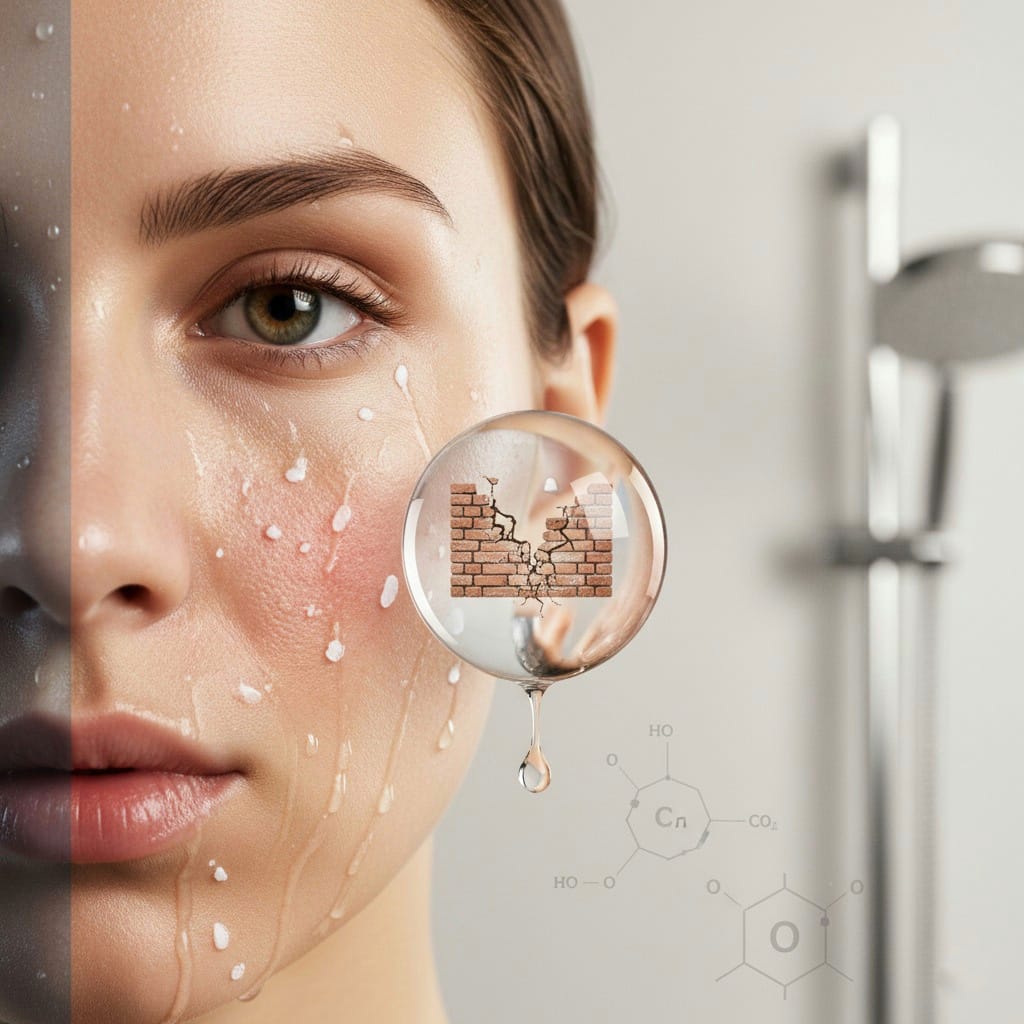
To effectively repair a damaged skin barrier, you must first recognize the biological complexity of what you are attempting to restore. The skin barrier, scientifically known as the stratum corneum, serves as the uppermost layer of your epidermis and acts as your body’s primary line of defense. Experts and dermatologists often describe this vital structure using the “Bricks and Mortar” model, which simplifies its complex architecture.
In this biological analogy, the Bricks represent the corneocytes, which are dead skin cells providing structural strength and a physical shield. On the other hand, the Mortar consists of a sophisticated intercellular lipid matrix that glues these cells together. When this matrix remains intact and healthy, it effectively prevents a phenomenon known as Transepidermal Water Loss (TEWL). This is the natural process where moisture evaporates from your skin into the surrounding air.
Consequently, a robust and healthy barrier keeps your skin plump, youthful, and resilient against harmful pathogens. However, once the “mortar” or lipid matrix cracks due to external stress, moisture escapes rapidly. This unfortunate breakdown allows environmental irritants—such as pollution and allergens—to rush into the deeper layers of the skin, causing significant chronic inflammation and sensitivity.
The Evolution of Modern Barrier Damage in 2026
In our current era, the struggle to repair a damaged skin barrier involves much more than just avoiding harsh soaps or aggressive physical scrubbing. In fact, we are facing modern technological and environmental challenges that were significantly less common a decade ago.
For instance, emerging clinical research suggests that constant blue light exposure from smartphones and laptops can generate destructive free radicals. These unstable molecules trigger oxidative stress within the skin cells, which gradually weakens your lipid barrier from the inside out. Additionally, urban living constantly exposes our skin to microscopic particulate matter or pollution. Furthermore, these tiny particles can lodge themselves within a weak barrier, leading to a frustrating condition known as “Inflammaging.” Moreover, the rise of viral skincare trends on social media has led to an “actives” obsession. Many consumers are now layering high-strength acids and retinols without proper guidance. Unfortunately, layering too many potent products simultaneously is now identified as a primary cause of Chemical Burn Syndrome, making it harder than ever to maintain a healthy complexion.
Identifying the Symptoms: How to Diagnose Your Skin at Home
Identifying the need to repair a damaged skin barrier requires a keen eye for subtle physiological changes. While persistent redness is the most common and obvious sign, you should also look for these advanced symptoms to fully understand your skin’s current health status:
- The Orange Peel Texture: If your pores look unusually large while your skin feels painfully tight and dehydrated, your barrier is likely struggling to retain water.
- Acquired Sensitivity: You might suddenly react to “safe” or “hypoallergenic” products that you have successfully used for years. This occurs because your damaged barrier can no longer filter out basic preservatives or stabilizers.
- Delayed Healing Process: Even a small scratch, a minor bug bite, or a simple pimple might take weeks to disappear. Essentially, this indicates that your skin’s natural regenerative and inflammatory response cycles have slowed down significantly.
- Micro-inflammation and Bumps: You may notice clusters of tiny, skin-colored bumps. These are not traditional acne but rather a sign of a compromised ecosystem, making your complexion look uneven under certain lighting conditions.
The Core Science: The 2:1:1 Lipid Ratio Deep Dive
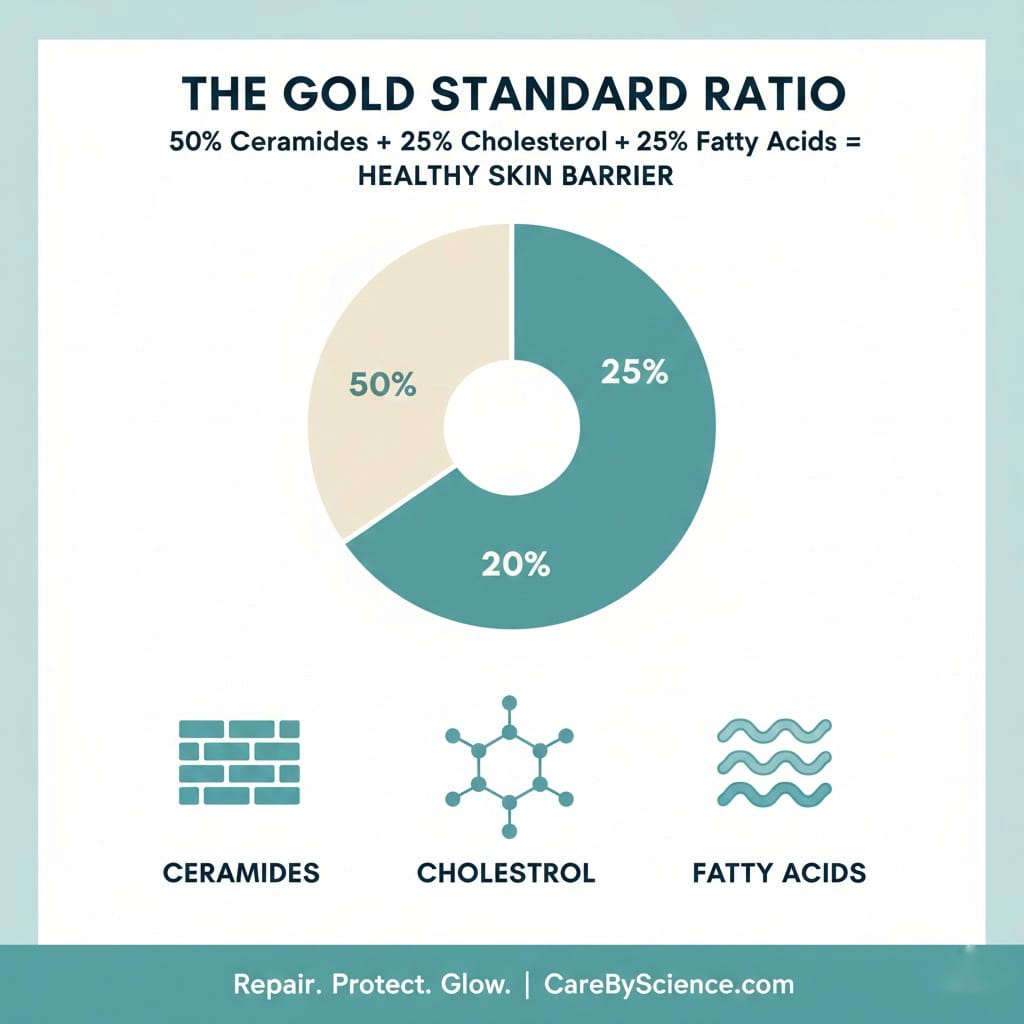
This section is perhaps the most critical for establishing your authority on the topic. While most generic skincare bloggers just mention “Ceramides” as a buzzword, you are providing the scientific Gold Standard required to repair a damaged skin barrier properly.
Why the Ratio is Mathematically Essential
Your skin barrier lipids are not just a random mixture of fats; they consist of three main components that must exist in harmony:
- 50% Ceramides: These act as the primary structural glue for your skin cells.
- 25% Cholesterol: This molecule serves as the stabilizer for the lipid bilayer.
- 15-20% Free Fatty Acids: These support the acid mantle and overall permeability.
According to research published by the Journal of Investigative Dermatology, applying a cream that contains only one of these components—like just ceramides—can actually delay the natural barrier repair process. Therefore, you absolutely require a tri-lipid mixture to see measurable results. Specifically, when checking product labels, look for:
- Ceramides 1, 3, and 6-II: These are the most vital types for human skin health.
- Phytosterols: This is a plant-derived version of cholesterol that mimics your skin’s natural lipids perfectly.
- Linoleic Acid: This is an omega-6 fatty acid that is frequently deficient in people with acne-prone or damaged skin.
The Acid Mantle and Microbiome Connection
To effectively repair a damaged skin barrier, you must realize that the protection isn’t just a physical wall; it is also chemical and biological in nature.
First, you must consider the Acid Mantle. This is a very thin, slightly acidic film on the surface of your skin made of sweat and sebum. Because its acidity typically stays between pH 4.5 and 5.5, it acts as a hostile environment for harmful pathogens like Staphylococcus aureus. If your cleanser is too alkaline (high pH), you essentially dissolve this mantle.
Second, you have the Skin Microbiome. Your skin is home to trillions of “good” bacteria that help fight off infection. However, when you over-wash or use harsh alcohol-based toners, you kill these tiny protectors. Unfortunately, this biological imbalance often leads to painful inflammatory conditions like Perioral Dermatitis or Eczema Flare-ups.
Internal Link Opportunity: Proper nutrient absorption is key to high-quality sebum production. You should read our detailed guide on Internal Wellness and Nutrition to see how certain vitamins impact your body’s ability to repair a damaged skin barrier from within.
Ingredient Encyclopedia: What to Look For in Products
When shopping for products to repair a damaged skin barrier, you must teach yourself to be a “Label Detective.” Marketing claims can be misleading, so the ingredients list is your only source of truth.
The “Healers” to Prioritize:
- Panthenol (Pro-Vitamin B5): This is a superstar for soothing immediate inflammation and promoting rapid wound healing.
- Centella Asiatica (Cica): This herb has been used for centuries in traditional medicine and is now a science-backed powerhouse for calming irritated nerves in the skin.
- Allantoin: Extracted from the comfrey plant, it helps shed dead skin cells gently without the need for harsh acids.
- Glycerin: Although it is often underrated because it is inexpensive, it is a superior humectant that can penetrate deeper into the skin than many high-molecular-weight Hyaluronic Acids.
The “Hidden Villains” to Avoid During Repair:
- Essential Oils: Scents like Lavender, Lemon, and Bergamot contain volatile compounds that oxidize and cause “Contact Dermatitis” on vulnerable skin.
- Witch Hazel: Since this is frequently formulated with a high percentage of alcohol, it can be far too stripping for a damaged barrier.
- Sodium Lauryl Sulfate (SLS): This is a harsh surfactant that creates foam but literally dissolves your natural lipids during the cleansing process.
The 4-Week Step-by-Step Recovery Plan
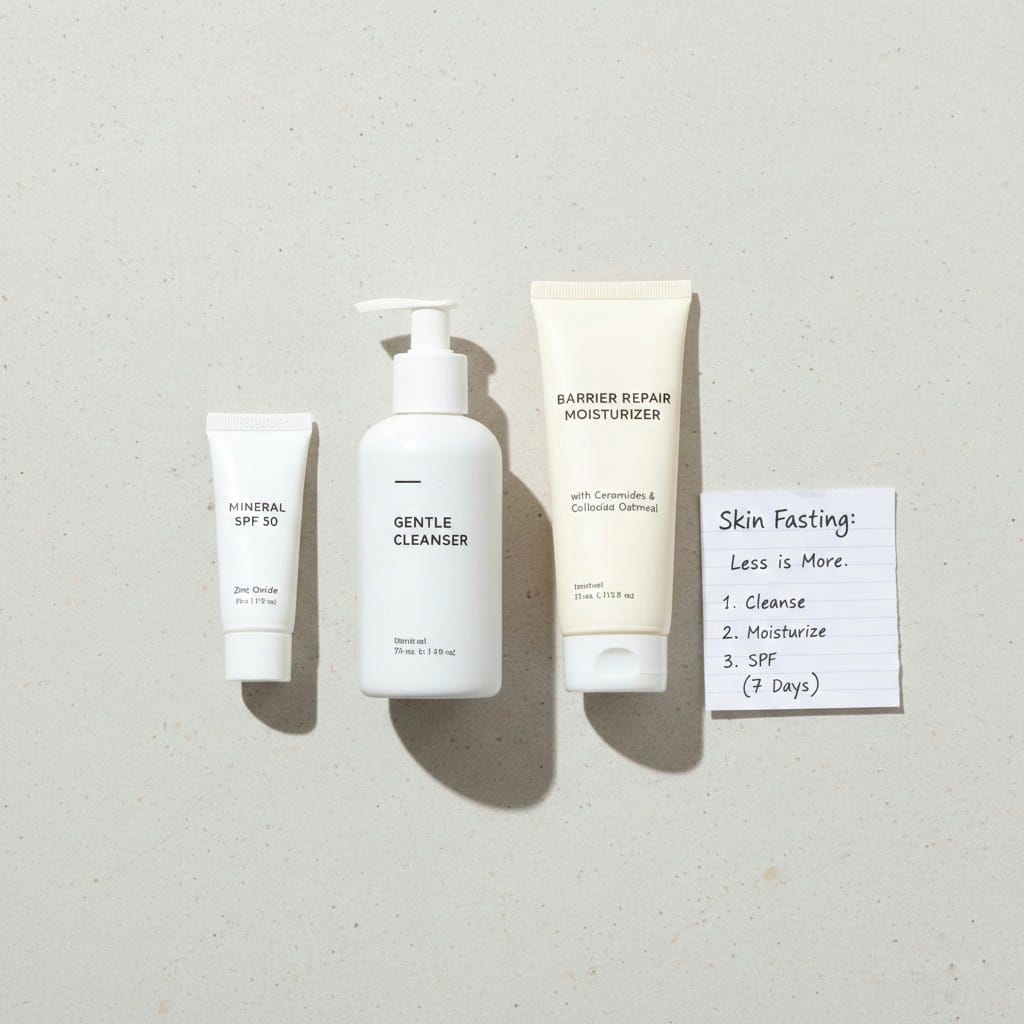
Following a structured timeline is the most effective way to repair a damaged skin barrier without causing further irritation. Consistency is more important than the number of products you use. For a deeper dive into the best barrier-repair ingredients, see our ingredient-focused guide here.
Week 1: The Emergency Reset (The “Bland” Routine)
- Goal: Stop the “fire” immediately.
- AM: Splash your face with lukewarm water only. Then, apply a thick, fragrance-free ceramide cream and a mineral-based SPF (Zinc Oxide).
- PM: Use a non-foaming cleansing milk. Afterward, apply your moisturizer and “Slug” with a thin layer of Petrolatum (Vaseline) if your skin feels extremely dry or cracked.
Week 2: Re-introduction of Soothing Agents
- Goal: Calm the persistent redness and stinging.
- New Step: You may now introduce a Niacinamide (ensure it is less than 5%) or a Centella-based serum. These specific ingredients help the skin start producing its own ceramides again naturally.
Week 3: Strengthening the Foundation
- Goal: Achieve deep, long-lasting hydration at a cellular level.
- New Step: Introduce a Hyaluronic Acid or Beta-Glucan serum. Make sure to apply it on damp skin before your moisturizer to lock the water into the epidermis.
Week 4: Maintenance and Future Prevention
- Goal: Test your skin’s newly built resilience.
- New Step: If the skin feels normal and no longer stings when you apply products, you may slowly introduce a very gentle exfoliant, such as Mandelic Acid (PHA), once a week to help with skin texture.
Lifestyle and Holistic Factors for Skin Health
Most global readers, especially in the USA, appreciate “Whole-Body” health advice when trying to repair a damaged skin barrier. Your environment and habits play a role as large as your skincare products.
Regarding your daily environment, consider the impact of Hard Water vs. Soft Water. Hard water has an alkaline pH and contains minerals that can irritate the skin. If you cannot afford a specialized water filter, try using Micellar Water for your final rinse. Furthermore, you should pay attention to the Gut-Skin Axis. Inflammation in the gut, often triggered by high sugar or processed foods, frequently manifests as skin sensitivity and redness. Additionally, remember to use Humidity Control. In dry climates or during winter, using a Humidifier in your bedroom keeps the ambient air from “stealing” water from your face while you sleep.
Common Myths Debunked
- Myth 1: “Oily skin cannot have a damaged barrier.”
- Truth: Oily skin often overproduces sebum specifically because the barrier is damaged. The skin tries to compensate for internal dehydration by pumping out oil, leading to Dehydrated Oily Skin.
- Myth 2: “Natural is always better for healing.”
- Truth: Poison ivy and lemon juice are natural, yet they are highly toxic or irritating to the skin. For the purpose of trying to repair a damaged skin barrier, lab-synthesized ingredients like Petrolatum and Synthetic Ceramides are much safer because they are pure, stable, and non-allergenic.
Summary and Expert Checklist
In summary, the journey to repair a damaged skin barrier requires science-based precision and a lot of patience. To ensure your recovery is on the right track, use this daily checklist:
- [ ] Did I check my cleanser’s pH to ensure it is 5.5 or below?
- [ ] Is my daily moisturizer formulated with the 2:1:1 lipid ratio?
- [ ] Have I completely stopped using all harsh acids, scrubs, and retinoids?
- [ ] Am I running a humidifier during the night to prevent moisture loss?
- [ ] Is my washing water temperature lukewarm rather than hot?
The Long Game of Skin Resilience
Ultimately, trying to repair a damaged skin barrier is not a sprint; instead, it’s a marathon of discipline. While it’s tempting to try the latest “miracle” serum you see on social media, the science consistently proves that simplicity and consistency are the only ways to truly heal. Treat your skin like a delicate silk fabric. Wash it gently, protect it from the elements, and give it the time it needs to weave itself back together. Your skin is your bodyguard; treat it with the respect it deserves, and it will reflect your inner health beautifully.

Tamanna Zaman is an English graduate and self-care researcher at CareByScience, creating research-driven content on skincare, haircare, and wellness. By analyzing clinical studies and verified expert insights, she provides actionable, trustworthy routines that help readers achieve healthier skin, stronger hair, and overall wellbeing.