Does your face feel tight the moment you step out of the shower? Are you noticing flaky patches around your nose or redness on your cheeks that just won’t go away?
If you answered yes, you are likely suffering from the “February Freeze.” By this time of year, the combination of harsh outdoor winds and dry indoor heating has stripped your skin of its natural oils. For those with sensitive skin, this isn’t just uncomfortable—it can be painful. In 2026, we know that simply slathering on a thick cream isn’t enough. You need a strategic Winter Skincare Routine for Dry & Sensitive Skin.
The Science: Why Winter Wrecks Your Skin Barrier
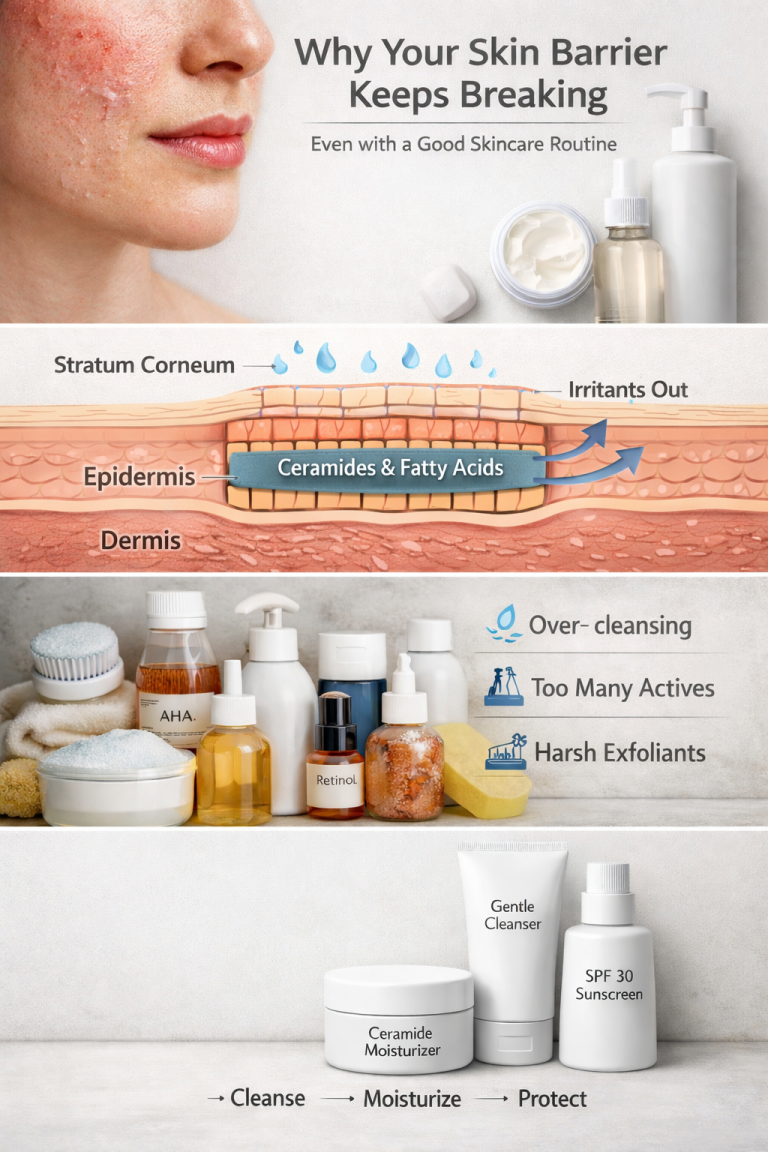
To fix the problem, you first need to understand what is happening at a cellular level. Your skin has a protective outer layer called the stratum corneum, which acts like a brick wall. The “bricks” are your skin cells, and the “mortar” holds them together with lipids (fats).
In winter, two things happen simultaneously:
- Low Humidity: Cold air holds less moisture. This drop in humidity literally sucks water out of your skin through a process called Transepidermal Water Loss (TEWL).
- Ceramide Depletion: Studies show that levels of ceramides (the healthy fats in your skin) drop significantly in colder months.
When you lose water and fats, the “mortar” crumbles. This leads to gaps in your barrier, allowing irritants in and moisture out. This is why your regular summer lotion suddenly feels like it stops working after five minutes. For a deeper dive into how this damage happens, read our guide on [How to Repair a Damaged Skin Barrier].
The 3 Golden Rules of Winter Skincare (2026 Edition)
Before we get to the products, you must adopt these three non-negotiable habits.
Rule 1: Respect the pH
Your skin is naturally acidic (around pH 5.5). Winter is not the time for “squeaky clean” skin. Using alkaline soaps or hot water strips your acid mantle, making your skin vulnerable to bacteria and extreme dryness.
Rule 2: Layering > Thickness
Many people make the mistake of buying one ultra-thick cream. However, in 2026, dermatologists recommend “hydration sandwiching.” This means layering watery toners under oils or creams to trap moisture at multiple levels.
Rule 3: Don’t Forget the Neck
The skin on your neck is thinner than on your face and produces fewer oils. It is often the first place to show “winter aging.” Treat your neck with the same products you use on your face.
Ingredients for Your Winter Skincare Routine for Dry & Sensitive Skin
Not all moisturizers are created equal. When shopping for products for your winter skincare routine for dry & sensitive skin, look for these science-backed heroes.
The Winter Heroes (Must-Haves)
- Ceramides: These are essential for rebuilding the broken “mortar” in your skin barrier.
- Glycerin: A powerful humectant that pulls moisture from the deeper layers of your skin to the surface. It is often more effective than Hyaluronic Acid in very dry climates.
- Oat Extract (Colloidal Oatmeal): The gold standard for soothing the “winter itch” and calming redness instantly.
- Squalane: A lightweight oil that mimics your skin’s natural sebum. It seals in moisture without feeling heavy or greasy.
The Winter Villains (Skip These)
- High % Alcohol: Often found in toners, denatured alcohol will dehydrate your skin instantly.
- Clay Masks: These are designed to absorb oil. In winter, you need to keep every drop of oil you have.
- Strong Physical Scrubs: If your skin is flaking, do not scrub it off! Those flakes are attached to live skin cells. Scrubbing will only cause micro-tears and more inflammation.
Step-by-Step Morning Routine: Protect & Hydrate
Your morning goal is simple: create a shield against the cold.
Step 1: The “Water-Only” Cleanse (Optional)
If you have extremely dry skin, you might not need cleanser in the morning. Simply rinsing with lukewarm water preserves the natural oils your skin produced overnight. If you feel greasy, use a non-foaming, creamy milk cleanser.
Step 2: Antioxidant Serum
Apply a Vitamin C serum or a soothing Niacinamide serum. Niacinamide is fantastic for winter because it boosts your skin’s own ceramide production.
- Internal Link: Learn more about this ingredient in our [Niacinamide Benefits for Skin] guide.
Step 3: The “Damp Skin” Moisturizer Method
Apply your moisturizer while your skin is still slightly damp. This traps water against your skin. Look for a cream that contains both humectants (to hydrate) and occlusives (to seal).
Step 4: Sunscreen (Yes, Even in Winter)
UV rays can penetrate through thick clouds and even glass windows. Snow also reflects up to 80% of UV rays, increasing your risk of sunburn. Use a moisturizing SPF 30 or higher.
Step-by-Step Evening Routine: Repair & Restore
Nighttime is when your skin goes into “recovery mode.” This is the time to bring out the heavy hitters.
Time needed: 15 minutes
A step-by-step evening skincare routine designed to repair the skin barrier, remove makeup without irritation, and lock in deep hydration for dry and sensitive skin during winter.
- Step 1: Oil Cleansing
Sunscreen and winter makeup are stubborn. Start with an oil-based cleanser or balm. Massage it into dry skin to dissolve impurities without stripping your barrier.
- Step 2: Gentle Second Cleanse
Follow up with a hydrating water-based cleanser. Avoid anything that leaves your skin feeling tight.
- Step 3: Hydrating Toner or Essence
This is the “sandwich” step. Pat a milky toner onto your skin. Ingredients like Panthenol (Vitamin B5) or Centella Asiatica are excellent here for calming windburn.
- Step 4: Treatment (Proceed with Caution)
If you are using active ingredients like Retinol or Exfoliating Acids, proceed with caution. Winter skin is more sensitive.
Tip: You might want to switch to the “sandwich method” (Moisturizer -> Retinol -> Moisturizer) to buffer the side effects.
If you are struggling with breakouts despite dryness, read our guide on [Niacinamide for Oily Skin] to manage balance. - Step 5: Seal with a Thick Cream
Finish with a rich, ceramide-packed moisturizer. Don’t be afraid of a slightly heavier texture at night.
- Step 6: Slugging (The Secret Weapon)
For the driest patches (cheeks, nose), apply a tiny layer of petrolatum ointment (like Vaseline or Aquaphor) as the very last step. This creates an impermeable seal that prevents 99% of water loss overnight.
Note: Do not slug over Retinol or strong acids, as it can intensify their potency and cause irritation.
Body Care: It’s Not Just About Your Face
Your winter routine shouldn’t stop at your chin. The skin on your body is often even drier than your face.
- Shower Temperature: We know hot showers feel amazing, but they melt away your skin’s lipids. Stick to lukewarm water.
- Moisturize Immediately: Apply body lotion within 3 minutes of turning off the shower to lock in steam.
- Targeted Treatment: If you have crepey skin on your arms or legs, winter is a great time to start a repair routine.
Stinging is a sign that your skin barrier is compromised. It means the product is penetrating too quickly through the micro-cracks in your skin. Switch to a bland, fragrance-free moisturizer with minimal ingredients until the barrier heals.
Yes, but very gently. Dead skin cells can block moisture from entering. Use a mild chemical exfoliant (like Lactic Acid or PHA) once a week. Avoid harsh physical scrubs.
Yes, but be careful. In dry climates, Hyaluronic Acid can sometimes pull water out of your skin if there is no moisture in the air. Always apply it to damp skin and seal it immediately with an occlusive cream.
Licking your lips makes them drier. Use a lip balm containing beeswax or lanolin throughout the day, and apply a thick layer of ointment before bed.
While hydration is important for overall health, drinking water is the least efficient way to hydrate your skin specifically. Topical application of moisturizers is much more effective for treating winter dryness.
Final Thoughts
Surviving winter doesn’t mean you have to endure three months of dull, flaky skin. By adopting this specific winter skincare routine for dry & sensitive skin, you can maintain a healthy, dewy glow even in freezing temperatures.
Remember, skincare is not a sprint; it’s a marathon. Be consistent, listen to your skin’s needs, and don’t be afraid to skip the actives if your face feels sensitive.
If you are noticing hair issues along with your dry skin this season, your scalp might be suffering too. Don’t miss our urgent guide on [Scalp Barrier Repair] to protect your hair from winter damage.
Disclaimer: This guide is for informational purposes only. If you have severe eczema, rosacea, or cracked skin that bleeds, please consult a board-certified dermatologist.

Tamanna Zaman is an English graduate and self-care researcher at CareByScience, creating research-driven content on skincare, haircare, and wellness. By analyzing clinical studies and verified expert insights, she provides actionable, trustworthy routines that help readers achieve healthier skin, stronger hair, and overall wellbeing.