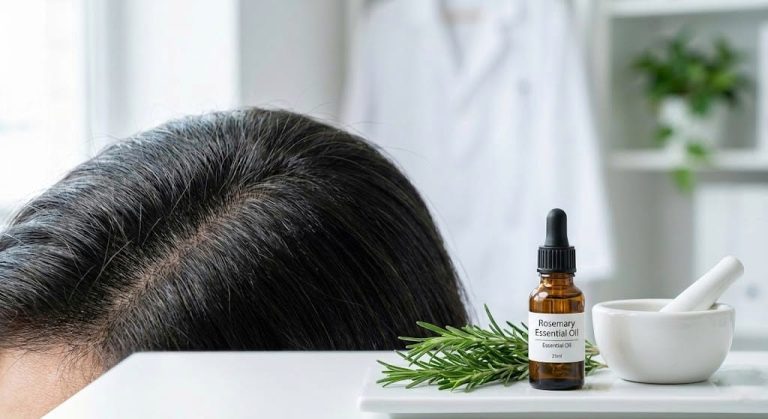
If you have been scrolling through social media lately, you have undoubtedly seen the viral hair growth trends. Everyone seems to be soaking their hair in rosemary oil, castor oil, or homemade heavy masks. The promise is always the same: thicker, longer, glossier hair. But here is the uncomfortable truth that few influencers are talking about.
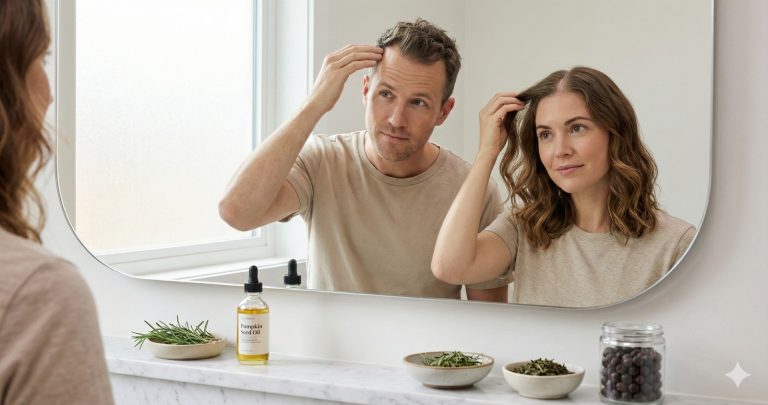
For a significant number of people, this heavy oiling routine is not fixing their hair. In fact, it is actively destroying their scalp health. If you have noticed that your scalp feels itchier, sorer, or flakier after you started your “healthy hair journey,” you are not imagining it.
You are likely dealing with a damaged scalp barrier.
Just like the skin on your face, your scalp has a delicate protective barrier. When this barrier is broken, dumping heavy oils on it is like pouring gasoline on a fire. Instead of growth, you get inflammation, hair shedding, and persistent itch.
In this comprehensive guide, we will break down the science of the scalp barrier, explain why your favorite oil might be the villain, and provide a dermatologist-backed roadmap to repair your scalp for actual, sustainable hair growth.
What Exactly Is the Scalp Barrier?
Before we can fix the problem, we must first understand the anatomy. We often treat our scalp as a mere extension of our hair, but biologically, it is skin.
Specifically, the scalp barrier serves the same function as the skin barrier on your face. It is the outermost layer (the stratum corneum) designed to keep hydration in and irritants out. However, the scalp is a unique environment. It has a higher density of hair follicles, more sebaceous (oil) glands, and its own unique ecosystem of bacteria and yeast, known as the scalp microbiome.
According to the National Institutes of Health (NIH), a compromised skin barrier is a leading cause of inflammatory skin conditions like seborrheic dermatitis.
Why the Barrier Matters for Hair Growth
You cannot grow a healthy plant in toxic soil. Similarly, you cannot grow healthy hair from an inflamed scalp.
- Protection: A healthy barrier protects the hair follicle from UV damage and pollution.
- Anchor: It provides a strong foundation for the hair root.
- Regulation: It controls oil production so you are neither too dry nor too greasy.
When this barrier is compromised, the “soil” becomes unstable. Consequently, the hair follicle shrinks, sheds, or stops producing hair altogether. If you are struggling with hormonal thinning alongside barrier issues, understanding DHT and Natural Hair Loss Blockers becomes essential to stop the cycle of shedding.
Signs Your Scalp Barrier Is Damaged
How do you distinguish between a “dirty hair day” and actual barrier damage? The symptoms are often subtle at first, but they escalate quickly if ignored.
If you are experiencing two or more of the following, your barrier is likely in trouble:
- Persistent Itchiness: Does your head itch even the day after washing it? This is the number one sign of inflammation.
- Soreness or Tenderness: Moving your hair to a new ponytail position hurts. This indicates that the inflammation has gone deep into the follicle.
- Small, Pimple-like Bumps: These are often mistaken for “scalp acne,” but they are frequently signs of folliculitis caused by a disrupted microbiome.
- Excessive Oiliness AND Dryness: This sounds contradictory, but it is common. Your scalp feels tight and dry, yet it produces oil rapidly to try to compensate.
- Hair Shedding: You notice more hair in the shower drain, specifically falling out from the root.
The Controversy: Why Hair Oiling Can Make It Worse

Now, let’s address the elephant in the room. We have compared Rosemary Oil vs. Minoxidil before, and it remains a fantastic ingredient. However, timing and context are everything.
Oiling is beneficial for a healthy scalp. It is disastrous for a damaged one.
1. The Malassezia Yeast Factor
Your scalp naturally hosts a yeast called Malassezia. Usually, it is harmless. However, this yeast feeds on fatty acids—specifically the lipids found in most plant oils (like coconut, olive, and castor oil).
When you have a damaged barrier, your microbiome is already unstable. By slathering your scalp in oil, you are essentially providing an “all-you-can-eat buffet” for this yeast. The yeast overgrows rapidly, releasing oleic acid as a byproduct. Research published in the Journal of Investigative Dermatology confirms that oleic acid can induce flaking and inflammation in sensitive individuals.
2. Trapping Bacteria
A damaged barrier has microscopic cracks. When you apply heavy oils, you create an occlusive seal over these cracks. Instead of healing, you trap heat, sweat, and bacteria against the skin. This creates a greenhouse effect that breeds infection.
3. The “Over-Washing” Cycle
Oil is hard to remove. To get it out, you often have to shampoo twice or use harsh sulfates. If your barrier is already fragile, this aggressive stripping removes your natural lipids alongside the added oil, leaving your scalp drier and more damaged than before.
How to Repair a Damaged Scalp Barrier (Step-by-Step)

- The “Zero-Oil” Detox
For the next 14 to 21 days, put your heavy oils on the shelf. This includes coconut oil, castor oil, and pure essential oils. You need to starve the yeast and let the skin breathe.
- Switch to a pH-Balanced Shampoo
Most drugstore shampoos are too alkaline (high pH), which disrupts the skin’s acid mantle. A healthy scalp has a pH of around 5.5. Look for labels that say “pH balanced” or “Microbiome-friendly.”
- Hydration vs. Moisture
There is a massive difference between hydration (water) and moisture (oil). A damaged barrier is dehydrated. It needs water. Before you wash your hair, apply a Pure Aloe Vera Gel mask to your scalp for 20 minutes.
- Supplement Your Recovery
While topical repair is vital, internal support speeds up the process. Using the Top 10 Hair Growth Supplements & Vitamins, like Zinc and Biotin, can help strengthen the new skin cells forming underneath the damaged layer
Fixing a damaged scalp requires a shift in mindset. You need to move away from “stimulation” (growth) and focus entirely on “soothing” (repair). This process typically takes 4 to 6 weeks.
Ingredients: The Heroes and The Villains
The Heroes (Use These)
- Ceramides: These are the “glue” that holds skin cells together.
- Panthenol (Vitamin B5): A powerhouse for healing that reduces inflammation.
- Allantoin & Centella Asiatica: These ingredients, often cited by PubMed studies, effectively calm redness and soreness.
The Villains (Avoid These for Now)
- Heavy Fragrance: “Parfum” is a major cause of contact dermatitis.
- Physical Scrubs: Large salt or sugar granules can tear healing tissue.
- Lemon Juice: Extreme pH levels will destroy your acid mantle instantly.
A Dermatologist-Approved Repair Routine (2026)
- Pre-Shampoo: Apply a water-based scalp serum or Aloe Vera gel. Let’s sit for 15 minutes.
- Cleanse: Use a sulfate-free, pH-balanced shampoo. Focus on the roots.
- Condition: Apply conditioner to the ends only. Do not let it touch your scalp.
- Day 2 & 3 (Rest): Do not wash. If your scalp feels dry, apply a drop of squalane oil. Squalane is unique because it is “skin-identical” and does not feed the Malassezia yeast.
Frequently Asked Questions (FAQs)
Generally, no. For a damaged barrier, it often traps heat and causes more itching. Squalane is a safer alternative.
Not exactly, but they are related. Dandruff is usually caused by yeast overgrowth; a damaged barrier allows that yeast to take over.
The skin cycle takes about 28 days. Expect to stick to a gentle routine for at least 4 weeks.
Final Thoughts
Your scalp is living tissue that requires respect. If you are struggling with hair loss, look at your scalp first. If it is red or itchy, put down the growth oil and pick up the barrier repair tonic. By healing the “soil,” you ensure that your hair has a strong foundation to thrive once you return to your growth routine.

Tamanna Zaman is an English graduate and self-care researcher at CareByScience, creating research-driven content on skincare, haircare, and wellness. By analyzing clinical studies and verified expert insights, she provides actionable, trustworthy routines that help readers achieve healthier skin, stronger hair, and overall wellbeing.