If you have been scrolling through hair health forums or consulting dermatologists recently, you may have noticed a frustrating pattern. A woman experiences noticeable hair thinning, visits her doctor for blood tests, and is told that her iron levels are “perfectly normal.” Yet her hair continues to shed excessively whenever she brushes or washes it. This scenario is all too common among women dealing with ferritin and hair loss in women.
There is a clear reason for this disconnect. In clinical trichology, “normal” laboratory ranges and “optimal” levels for hair follicle function are not the same thing. Many women experience avoidable hair loss because their iron stores, measured as ferritin, fall within the laboratory’s normal range but remain too low to support hair growth properly. For more details on nutrients that support iron utilization and hair health, see our Vitamin D guide.
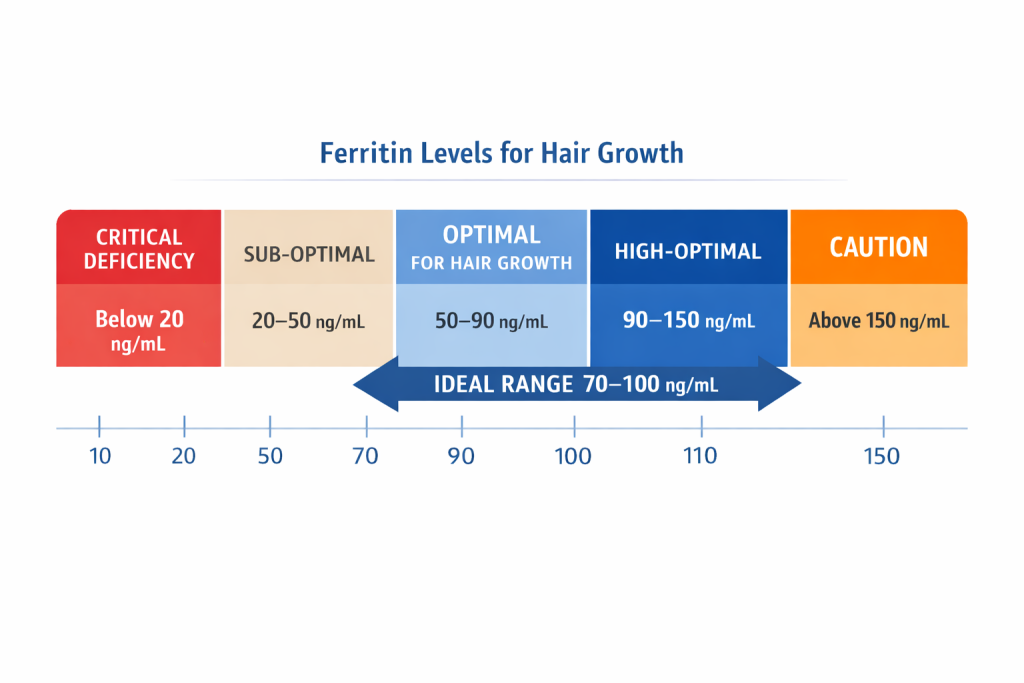
Most hair specialists and clinical trichologists aim for serum ferritin levels above 50–70 ng/mL to support active hair regrowth and reduce shedding. Standard laboratory reference ranges may classify ferritin levels as normal even when they are as low as 15 ng/mL. Still, levels below 30 ng/mL are strongly associated with chronic telogen effluvium and shortened hair growth cycles. Achieving ferritin levels between 70–100 ng/mL is often necessary before noticeable improvements in hair density appear.
The Cellular Mechanism: Why Hair Follicles Need Iron
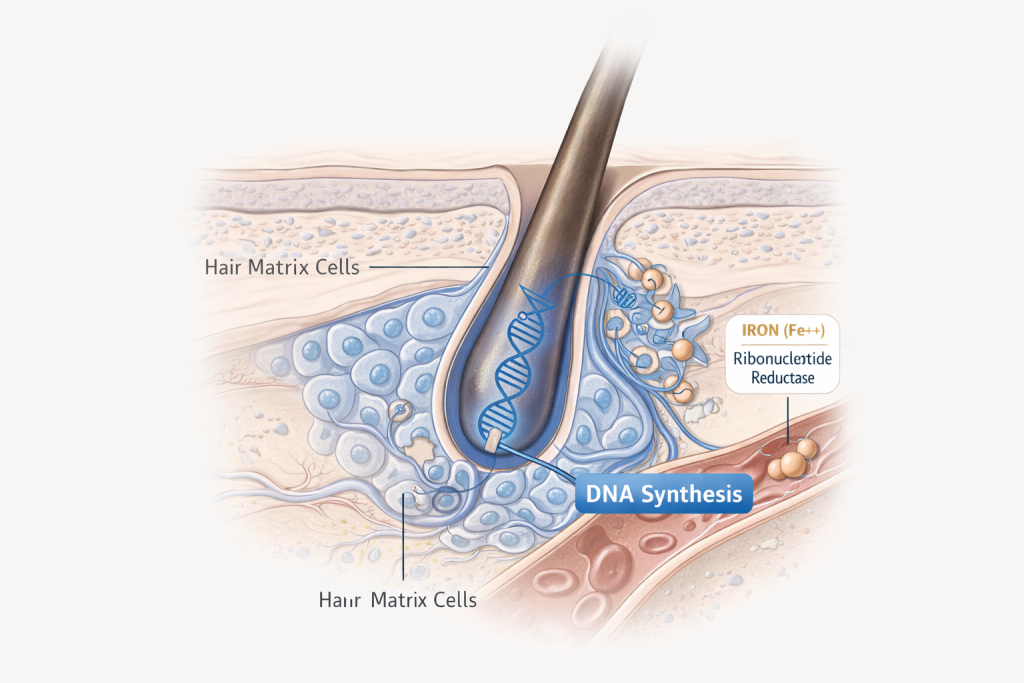
Hair matrix cells are among the fastest-dividing cells in the human body. To sustain this rapid growth, they require iron as a cofactor for ribonucleotide reductase, an enzyme essential for DNA synthesis. When ferritin levels drop, this enzyme cannot function at full capacity, shortening the anagen (growth) phase and leading to weaker hair. This is a common reason why many women experience ferritin and hair loss in women, even if their hemoglobin appears normal.
The body prioritizes vital organs over hair. During low iron states, ferritin is diverted to support hemoglobin production for oxygen transport, leaving hair follicles “starved.” This is why hair thinning often shows up before clinical anemia is detected.
Iron does not act alone. Nutrients like Vitamin D play a crucial role in regulating iron absorption and utilization, making it essential to maintain adequate levels. Learn more in our Vitamin D guide.
For a deeper understanding of ferritin’s role in cellular function, see this NIH article on iron metabolism.
Image suggestion: iron-dna-synthesis-hair-follicle-diagram.jpg
Alt text: Diagram showing iron’s role in DNA synthesis inside hair follicle cells
Normal vs Optimal Ferritin Levels
Standard laboratory reference ranges are designed to detect severe iron deficiency or anemia. They are not intended to identify nutrient levels that optimize hair follicle performance.
| Ferritin Level (ng/mL) | Clinical Status | Impact on Hair Growth |
|---|---|---|
| Below 20 | Critical deficiency | Significant shedding and acute telogen effluvium are likely |
| 20 – 50 | Sub-optimal | Hair shedding may continue and regrowth remains limited |
| 50 – 90 | Optimal range | Shedding usually stabilizes, and hair thickness improves |
| 90 – 150 | High-optimal | Beneficial for those with chronic thinning |
| Above 150 | Caution | May indicate inflammation, infection, or iron overload |
Being “not anemic” does not automatically mean the body has sufficient iron reserves to support healthy hair growth.
Low Ferritin with Normal Hemoglobin
Many women experience stage-one iron deficiency, where ferritin levels are low, but hemoglobin levels still appear normal on a standard blood test.
This occurs because the body uses stored iron to maintain hemoglobin production. In simple terms, ferritin acts like the body’s savings account, while hemoglobin represents daily spending. When iron intake drops, the body withdraws from ferritin stores to keep hemoglobin stable.
Doctors may therefore report that blood tests are normal, even though iron reserves are already depleted. During this stage, hair follicles can experience significant nutrient shortages, leading to ongoing shedding and slow regrowth.
Signs of Iron-Related Hair Loss
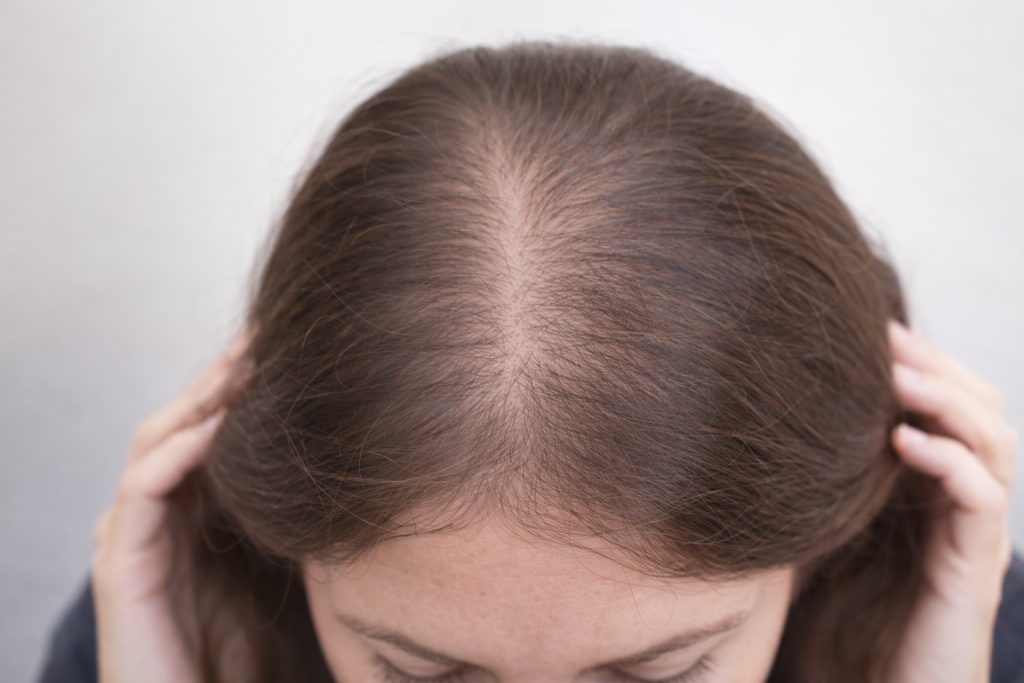
Only a blood test can confirm ferritin deficiency, but certain hair patterns commonly appear when iron stores are low.
Diffuse thinning
Hair density decreases evenly across the entire scalp rather than in a specific pattern.
Increased shedding
Large amounts of hair accumulate in the shower drain, hairbrush, or pillow.
Texture changes
Hair may become brittle, dry, or straw-like before it begins to fall out.
Slow growth
Hair appears stuck at the same length because follicles exit the growth phase too early.
When Iron Supplementation May Not Be Appropriate
Although improving ferritin levels can help many people, iron supplements should not be taken without proper medical evaluation.
Avoid self-supplementation if:
• You have hemochromatosis, a genetic condition that causes excessive iron absorption.
• Your ferritin levels are elevated due to inflammation or infection, since ferritin rises during immune responses.
• You have not completed baseline blood testing.
Excess iron can lead to oxidative stress, liver complications, joint pain, and heart problems. Medical supervision is always recommended before beginning supplementation.
Restoring Ferritin Levels
Rebuilding iron stores is a gradual process. Hair growth cycles are slow, so consistent treatment over several months is usually required.
Choosing the Right Form of Iron
Traditional iron supplements such as ferrous sulfate can cause digestive discomfort, including constipation and nausea. Newer formulations tend to be easier to tolerate.
Iron bisglycinate
A chelated form that offers high absorption with fewer gastrointestinal side effects.
Heme iron polypeptides
Derived from animal sources and absorbed through a more efficient pathway in the digestive system.
Maximizing Iron Absorption
Iron absorption is influenced by several dietary factors.
Take iron with vitamin C
Vitamin C improves iron absorption by creating a more acidic digestive environment.
Avoid coffee or tea near your dose
Tannins and polyphenols bind to iron and significantly reduce absorption. Allow at least two hours between caffeine and iron supplements.
Separate iron from calcium
Calcium competes with iron for absorption in the gut. Avoid taking iron alongside milk, yogurt, or calcium supplements.
The Role of Vitamin D and Vitamin B12
Iron works alongside other nutrients that support blood and cellular health.
Vitamin D helps regulate hepcidin, the hormone responsible for controlling iron absorption. When vitamin D levels are low, the body may struggle to properly regulate iron metabolism.
Vitamin B12 is essential for healthy red blood cell production. Deficiencies in B12 can worsen fatigue and indirectly affect hair health.
Many individuals experiencing chronic hair thinning show deficiencies in multiple nutrients simultaneously, particularly ferritin, vitamin D, and vitamin B12.
Factors That Increase Iron Loss
Certain life stages and lifestyle factors significantly increase the risk of low ferritin levels.
Heavy menstrual cycles
Frequent or heavy bleeding is the most common cause of iron depletion in pre-menopausal women.
Pregnancy and postpartum recovery
Growing a baby requires substantial iron stores, and breastfeeding can prolong depletion.
High-impact exercise
Long-distance running and other repetitive impact activities may increase iron turnover due to red blood cell breakdown.
Vegetarian or vegan diets
Plant-based iron sources are absorbed less efficiently than iron from animal products.
Frequently Asked Questions
Yes. Rosemary oil works externally by improving blood circulation in the scalp, while iron supports the internal cellular processes required for hair growth.
Possible reasons include poor digestive absorption, frequent consumption of coffee or dairy near iron doses, or continued iron loss from heavy menstrual cycles.
Iron infusions can increase ferritin levels rapidly, but they are typically reserved for individuals with severe deficiency or digestive conditions that prevent oral iron absorption.
Stress does not directly reduce iron stores, but it can lead to poor nutrition and digestive changes that affect absorption. High stress levels can also trigger other forms of hair loss.
The Hair Recovery Timeline
Restoring ferritin is a gradual process, and visible hair improvements take time.
Weeks 1–4
Energy levels often improve, and symptoms such as fatigue or brain fog may decrease.
Weeks 8–12
Excessive shedding usually begins to stabilize.
Months 4–6
New baby hairs often appear along the hairline and scalp density begins to increase.
Final Thoughts
Persistent hair thinning can be frustrating, especially when routine blood tests appear normal. However, ferritin levels that fall within standard laboratory ranges may still be too low to support healthy hair growth.
When ferritin levels reach a range supportive of follicle function, typically around 70 ng/mL or higher, hair follicles regain the ability to sustain proper growth cycles.
If hair shedding continues despite topical treatments and cosmetic products, examining internal nutrient levels may provide the missing answer. Addressing ferritin deficiency not only supports stronger hair but also improves overall cellular health and energy levels.

Tamanna Zaman is an English graduate and self-care researcher at CareByScience, creating research-driven content on skincare, haircare, and wellness. By analyzing clinical studies and verified expert insights, she provides actionable, trustworthy routines that help readers achieve healthier skin, stronger hair, and overall wellbeing.