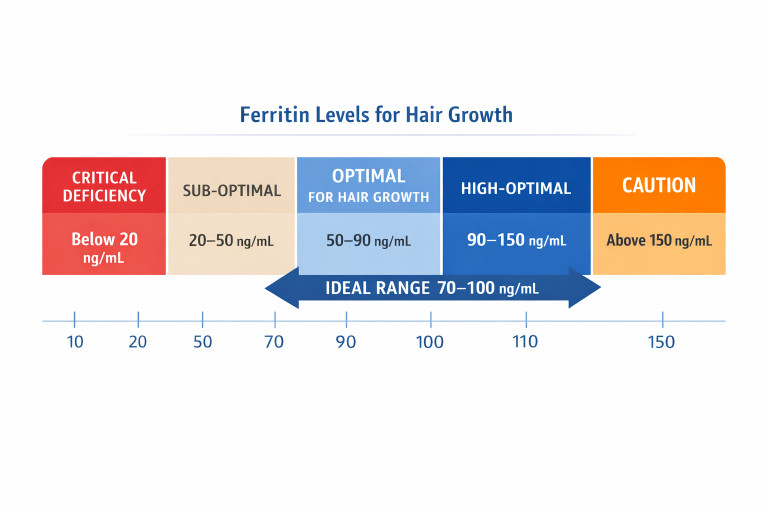
If you are looking for Rosemary Oil Hair Growth results, clinical studies indicate that it can achieve comparable hair regrowth to 2% Minoxidil over six months. Hair thinning and hair loss affect millions of people worldwide. As a result, many individuals experience stress, reduced confidence, and daily frustration. For decades, dermatologists and researchers promoted Minoxidil 2% as the gold standard for hair regrowth. However, despite its effectiveness, many users struggle with persistent side effects such as scalp itching, flaking, dryness, and the well-known “initial shedding phase,” where hair fall temporarily worsens before improvement begins.
In recent years, especially in 2026, a noticeable shift toward science-backed natural alternatives has emerged. Among them, rosemary oil stands out—not as a social-media myth, but as a clinically researched solution. Modern studies confirm that rosemary oil strengthens hair follicles, improves scalp health, and reduces hair loss without relying on harsh synthetic chemicals.
In this comprehensive guide, we will explore the science behind Rosemary Oil Hair Growth, compare it directly with Minoxidil, and provide a practical, evidence-based routine for safe and sustainable hair regrowth.
Internal Discovery: If scalp oiliness or inflammation concerns you, you may also find our guides on Niacinamide Benefits for Skin and Niacinamide for Oily Skin helpful, as scalp health and skin health are closely connected.
Quick Answer: Does Rosemary Oil Actually Grow Hair?
Yes. Clinical evidence shows that Rosemary Oil Hair Growth effectiveness is comparable to 2% Minoxidil when used consistently for six months. Specifically, it works by improving scalp blood circulation, repairing nerve damage through carnosic acid, and inhibiting DHT—the hormone responsible for pattern hair loss—while maintaining a significantly better safety profile.
Rosemary Oil vs Minoxidil: Understanding the Core Differences
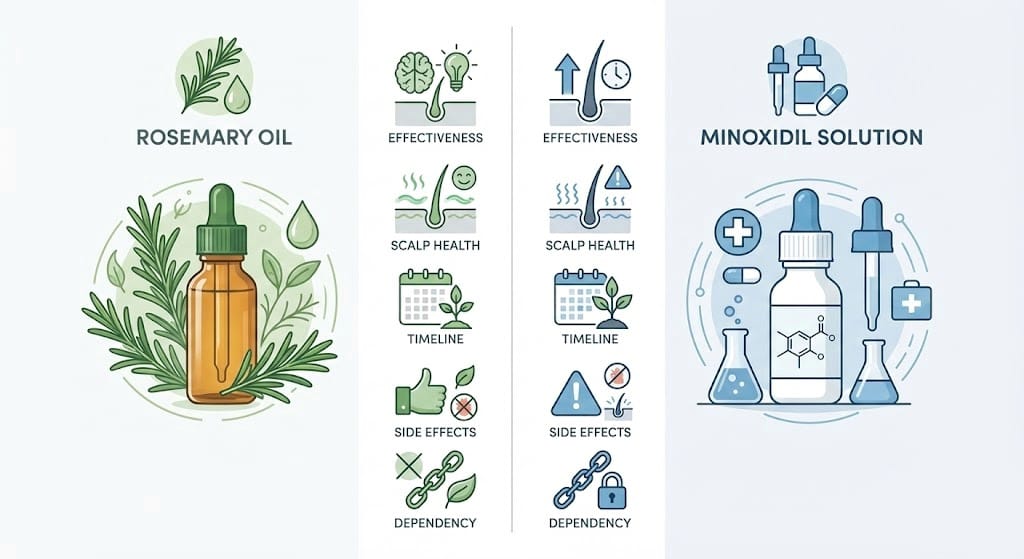
When choosing between a pharmaceutical drug and a botanical extract, you must consider speed versus sustainability. Minoxidil often produces quicker visible results; however, it creates long-term dependency. Once users stop applying Minoxidil, the regrown hair usually sheds within a few months.
Rosemary oil, on the other hand, supports hair growth through a more holistic and restorative process that addresses the root environment of the follicle.
Key Differences at a Glance
- Safety Profile: Rosemary oil rarely causes scalp burning, redness, or chronic irritation when diluted properly, unlike Minoxidil.
- Long-Term Scalp Health: Instead of forcing follicles to grow, rosemary oil reduces inflammation, oxidative stress, and follicle damage.
- Growth Timeline: Minoxidil may show early changes within 12 weeks. In contrast, Rosemary Oil Hair Growth generally requires 20–24 weeks of consistent use for visible improvement.
Therefore, while rosemary oil works more slowly, it supports healthier and more sustainable regrowth.
The 2015 PubMed Study: Does Rosemary Oil Hair Growth Work?
To understand why rosemary oil gained scientific credibility, we must examine a landmark clinical study published on PubMed. Researchers followed men and women with androgenetic alopecia for six months and compared rosemary oil with 2% Minoxidil.
Key Findings from the Study
- Equal Effectiveness: Both groups experienced a similar and statistically significant increase in hair count after six months.
- Better Comfort: Participants using rosemary oil reported far less scalp itching and irritation.
- Superior Safety: Researchers concluded that rosemary oil offers a viable natural alternative to Minoxidil with fewer side effects.
This study fundamentally shifted how professionals view natural hair-regrowth solutions.
The Deep Science: How Rosemary Oil Stimulates Hair Follicles
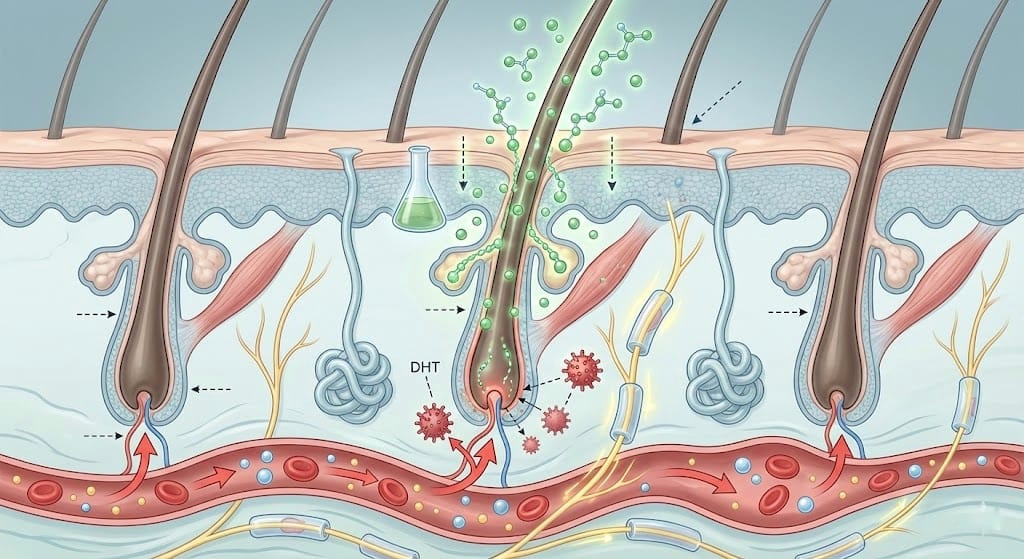
Understanding the biological mechanism behind Rosemary Oil Hair Growth helps you apply it more effectively and set realistic expectations.
1. Carnosic Acid and Nerve Repair
Rosemary oil contains high concentrations of carnosic acid, a compound known for repairing tissue and nerve damage. Healthy nerve endings play a crucial role in follicle signaling. When nerves function properly, hair follicles remain in the active growth (anagen) phase longer.
2. Boosting Scalp Micro-Circulation
Much like Minoxidil, rosemary oil acts as a natural vasodilator. When massaged into the scalp, it widens blood vessels and increases oxygen and nutrient delivery to dormant follicles. Consequently, follicles receive the nourishment they need to grow thicker, stronger hair.
3. Blocking DHT Naturally
DHT (dihydrotestosterone) causes follicle miniaturization in pattern hair loss. Research suggests that rosemary oil may inhibit 5-alpha reductase, the enzyme responsible for converting testosterone into DHT. As a result, rosemary oil functions as a natural DHT blocker, helping preserve follicle size and density.
4. Preventing Lipid Peroxidation
Oily scalps often suffer from lipid peroxidation, a process where sebum oxidizes due to pollution and UV exposure. This oxidation triggers inflammation and hair fall. While niacinamide supports oil balance for skin, rosemary oil’s antioxidant properties stabilize scalp oils and protect follicles from inflammation.
Why Carrier Oils Matter: Dilution for Safe Results
Because rosemary oil is a highly concentrated essential oil, applying it directly to the scalp can cause irritation or chemical burns. Therefore, dilution with a suitable carrier oil is essential for Rosemary Oil Hair Growth success.
| Carrier Oil | Best For | Why It Works |
| Jojoba Oil | Oily Scalp | Mimics natural sebum and improves absorption |
| Pumpkin Seed Oil | Hormonal Hair Loss | Enhances DHT-blocking action |
| Castor Oil | Dry or Brittle Hair | Strengthens strands and locks in moisture |
| Argan Oil | Frizzy or Dull Hair | Repairs hair shaft while rosemary treats follicles |
Rosemary Water vs Rosemary Oil: Which One Should You Use?
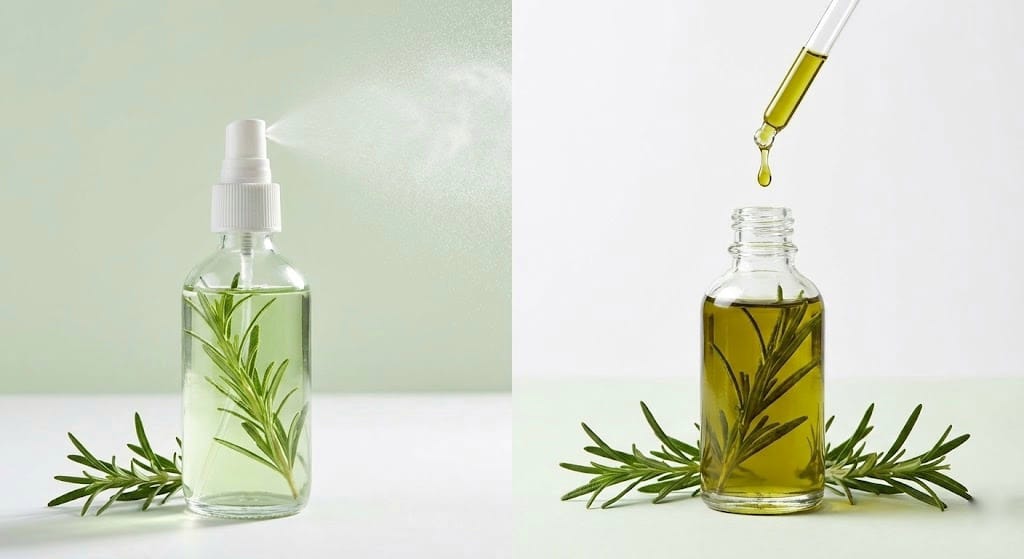
Many people confuse rosemary water with rosemary oil, but both serve different purposes in a 2026 hair care routine.
- Rosemary Water: A lightweight herbal infusion ideal for daily use, especially for fine or oily hair.
- Rosemary Oil: A concentrated treatment that penetrates deeply and remains active longer for maximum Rosemary Oil Hair Growth stimulation.
Expert recommendation: Use rosemary water as a daily scalp mist and apply rosemary oil twice weekly for intensive follicle stimulation.
The Shedding Phase: Do Not Panic
Mild shedding can occur during the first few weeks of starting your Rosemary Oil Hair Growth journey. However, this shedding indicates that weak hairs are being replaced with healthier strands. Unlike Minoxidil-induced shedding, rosemary oil shedding is usually mild and temporary.
A 7-Day Hair Regrowth Routine That Works
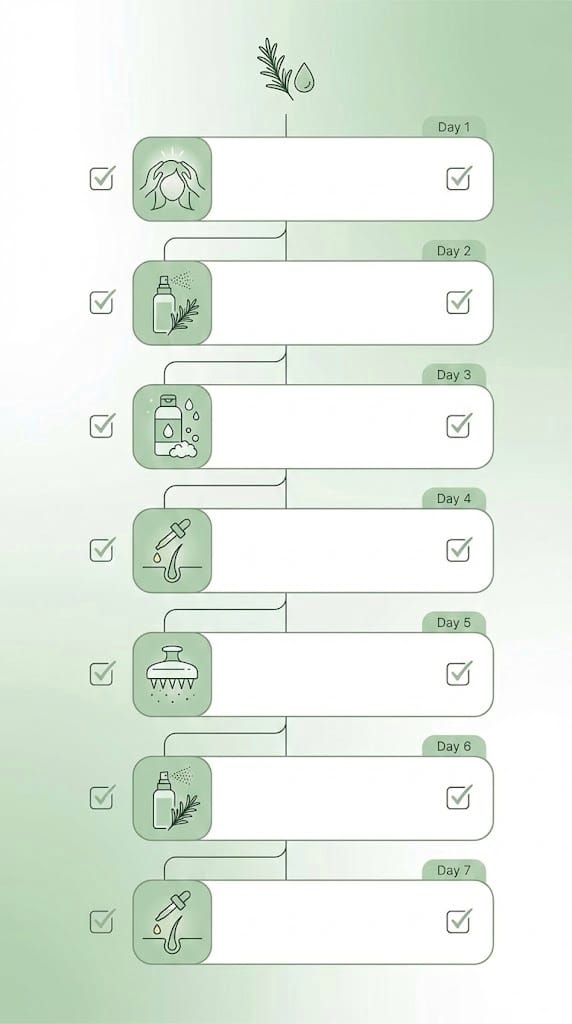
Consistency determines success. Follow this weekly routine for optimal results:
- Monday: Rosemary + jojoba oil massage (10 minutes), wash after 1 hour.
- Tuesday: Rosemary water mist (leave in).
- Wednesday: Scalp rest and gentle shampoo.
- Thursday: Rosemary + pumpkin seed oil massage.
- Friday: Rosemary water refresh.
- Saturday: Deep oil treatment with warm towel (2 hours).
- Sunday: Gentle scalp exfoliation with a silicone massager.
How to Use Rosemary Oil Safely (Step-by-Step)
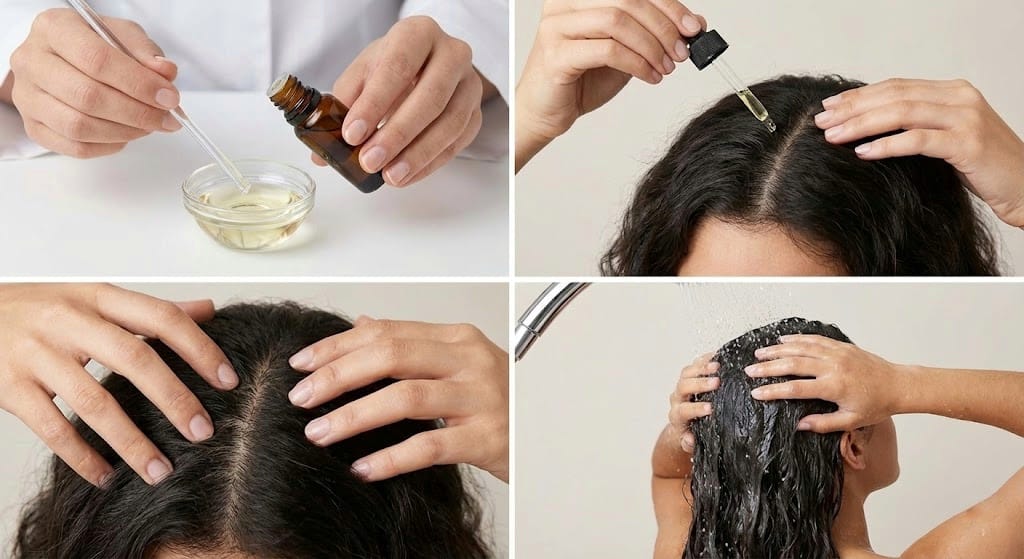
- Mix 5 drops of rosemary essential oil with 1 tablespoon of carrier oil.
- Apply directly to thinning areas.
- Massage gently using fingertips to boost circulation.
- Leave on for 30 minutes to 4 hours.
- Wash with a mild, pH-balanced shampoo.
Frequently Asked Questions
Can rosemary oil regrow a receding hairline?
Yes, as long as follicles remain active. Visible improvement often appears within six months of consistent use.
Can I leave rosemary oil overnight?
It is safer to wash it out after a few hours, especially if you have an oily scalp, to prevent clogged pores.
Can men and women use rosemary oil the same way?
Yes. The biological mechanism of Rosemary Oil Hair Growth remains the same for both genders.
Can I use rosemary oil with Minoxidil?
Some users gradually transition, but consulting a dermatologist is strongly advised before mixing treatments.
Final Thoughts: Patience Creates Results
Rosemary Oil Hair Growth is not a myth. Instead, it represents a clinically supported, safer, and more sustainable alternative to Minoxidil. By repairing nerves, improving circulation, and blocking DHT naturally, it targets the root causes of hair loss rather than masking symptoms.
Nevertheless, consistency matters more than speed. Commit to a six-month routine, and over time, your hair can become thicker, healthier, and more resilient.
Next step: Choose your carrier oil today and begin your first scalp massage. Your future self will thank you.

Tamanna Zaman is an English graduate and self-care researcher at CareByScience, creating research-driven content on skincare, haircare, and wellness. By analyzing clinical studies and verified expert insights, she provides actionable, trustworthy routines that help readers achieve healthier skin, stronger hair, and overall wellbeing.