If you have noticed the skin on your arms, knees, or neck starting to look thin and fragile—like crinkled tissue paper—you are not alone. This texture, known clinically as “crepey skin,” is one of the most common skin concerns for women over 40 in the United States. For years, the gold standard for treating wrinkles was strictly for the face. However, 2026 has ushered in a new era of “body skinification.” Finally, the science of anti-aging is moving below the neck.
Body retinol has emerged as the leading non-invasive solution for thickening thin skin and restoring elasticity. But does it actually work on stubborn areas like the knees and elbows? Moreover, how do you use it without irritation?
In this comprehensive guide, we will explore the science behind using body retinol for crepey skin, the best ingredients to pair it with, and a step-by-step routine to firm your body safely.
What Is Crepey Skin and Why Does It Happen?
Before diving into solutions, it is essential to understand the biological problem. Crepey skin is fundamentally different from regular wrinkles. While wrinkles are often caused by repeated muscle movements (like smiling or frowning), crepey skin is a result of thinning.
Specifically, the dermis (the thick, middle layer of your skin) loses its structural support. As we age, our bodies produce less collagen and elastin. Consequently, the skin becomes thinner and less able to “snap back” into place.
The 3 Main Culprits
- Sun Damage (Photoaging): Ultraviolet (UV) rays destroy elastin fibers. If you drove for years with the sun hitting your left arm, you might notice more crepiness there.
- Hormonal Changes: During menopause, estrogen levels drop, which drastically reduces collagen production.
- Dehydration: Unlike facial skin, body skin has fewer oil glands. Therefore, it dries out faster, making the crinkled texture more visible.
This is where retinol steps in.
The Science: How Retinol Treats Crepey Skin
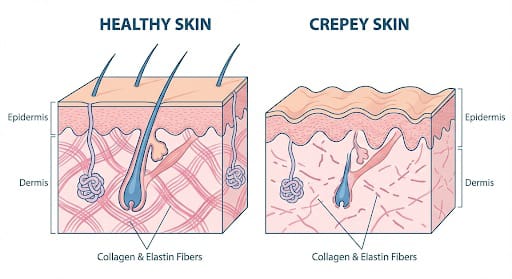
Retinol is a derivative of Vitamin A. It is widely regarded by dermatologists as the most effective topical ingredient for reversing signs of aging. But how exactly does it fix the “crepe paper” texture on your body?
1. Accelerates Cell Turnover
Retinol acts as a “personal trainer” for your skin cells. It speeds up the natural exfoliation process. As you age, your body’s ability to shed dead skin cells slows down. Retinol forces these old, dull cells to shed faster, revealing fresh, smoother skin underneath.
2. Thickens the Dermis
According to Harvard Health Publishing, retinoids stimulate collagen production, which is the most critical benefit for treating crepey skin.
3. Improves Structural Integrity
Beyond just collagen, retinol helps protect the elastin you still have. It inhibits the enzymes that break down collagen, effectively hitting the “pause button” on further sagging.
Note: Body skin is thicker than facial skin in some areas (like the back) but thinner in others (like the chest). Therefore, finding the right formulation is crucial.
Body Retinol vs. Facial Retinol: What’s the Difference?
You might be tempted to simply use your expensive face serum on your legs. However, that is often a mistake for two reasons: Cost and Formulation.
- Concentration: Body skin is generally less sensitive than facial skin (except for the neck and chest). Consequently, body lotions often use varying strengths or encapsulated retinol to deliver results over large surface areas without causing “retinol burn”.
- Moisture Base: Facial retinols are often lightweight serums. In contrast, body retinols are formulated in rich, emollient bases (like shea butter or glycerin). This is vital because crepey skin is almost always dry skin. You need that heavy moisture barrier to prevent irritation.
Best Ingredients to Pair with Body Retinol
To maximize your results and minimize irritation, you should look for body lotions that combine retinol with synergistic ingredients. In 2026, the best formulations are “hybrids” that hydrate while they repair.
1. Niacinamide (Vitamin B3)
This is the ultimate partner for retinol. Niacinamide strengthens the skin barrier and calms redness. Since retinol can be drying, adding niacinamide ensures your skin stays healthy and resilient during the treatment process.
2. Peptides
If retinol is the “builder,” peptides are the “messengers.” They signal your skin to produce more collagen. Using a lotion with both retinol and peptides gives you a double-punch approach to firming sagging skin.
3. Hyaluronic Acid & Ceramides
Retinol increases cell turnover, which can temporarily dehydrate the skin. Therefore, pairing it with humectants like Hyaluronic Acid (which draws water in) and Ceramides (which lock water in) is non-negotiable for treating the dry, crinkled look of crepey skin.
A Dermatologist-Approved Body Retinol Routine
Using body retinol requires patience and consistency. You cannot simply slap it on and expect overnight miracles. Here is a safe, effective routine to start reversing crepey skin on your arms and legs.
Step 1: The “Sandwich Method” (Evening Only)
Retinol breaks down in sunlight, so always apply it at night.
- Shower & Dry: Cleanse your skin with a gentle, non-stripping body wash.
- Base Layer: If your skin is extremely sensitive, apply a thin layer of basic moisturizer first.
- Treatment: Apply your chosen Body Retinol Lotion. Focus on target areas like the forearms, above the knees, and the décolletage (chest).
- Massage: Rub it in circular motions to boost circulation.
Step 2: The Morning Protection
This is the most important step. Retinol makes your skin photosensitive (more prone to sunburn).
- Sunscreen is Mandatory: If you use retinol at night, you must apply SPF 30+ to those areas in the morning if they will be exposed to the sun.
- Hydrate: Apply a ceramide-rich body lotion in the morning to keep the skin barrier strong.
How Often Should You Apply?
- Weeks 1–2: Apply every 3rd night. Let your skin adjust.
- Weeks 3–4: Increase to every other night.
- Month 2+: If your skin tolerates it, you can use it nightly.
Warning: If you notice redness, itching, or flaking, stop immediately and hydrate. This is called “retinization.” Wait for your skin to heal before trying again at a lower frequency.
Top 3 Mistakes to Avoid When Treating Crepey Skin
Even with the best products, you can sabotage your results if you aren’t careful. Here are common pitfalls to avoid.
1. Giving Up Too Soon
Unlike a moisturizer that works instantly, retinol is a long-term treatment. It takes 12 to 24 weeks to see significant changes in collagen density. Consistency is the only secret.
2. Skipping the Neck
The neck and chest are often the first places to show crepey skin. However, the skin here is thinner than on your arms. Use a smaller amount of product here and monitor closely for irritation.
3. Over-Exfoliating
Retinol is already exfoliating your skin from the inside out. Therefore, avoid using harsh physical scrubs or strong acids (like Glycolic Acid) on the same night you use retinol. This can damage your moisture barrier and lead to painful stinging.
Frequently Asked Questions (FAQs)
Yes, you can, but proceed with caution. Prescription retinoids (like Tretinoin) are significantly stronger than over-the-counter body lotions. They are more effective but carry a much higher risk of irritation, dryness, and peeling. Always consult a dermatologist before applying prescription-strength retinoids to large body areas.
Generally, you can expect to see a smoother texture within 4 weeks. However, for visible firming and reduction of crepey skin, consistent use typically takes 3 to 6 months.
No. Dermatologists universally recommend avoiding all forms of retinol (Vitamin A derivatives) during pregnancy and breastfeeding. Consider using Bakuchiol, a plant-based alternative, instead.
Yes, but you must be diligent about sun protection. Since retinol makes you more susceptible to UV damage, you must wear high-SPF sunscreen and protective clothing. If you plan to be at the beach all day, it is often best to skip retinol the night before.
Retinol can thicken the skin, which may help camouflage the appearance of cellulite slightly. However, it is not a cure for cellulite, which is caused by the fat structure below the skin.
Final Thoughts: Is Body Retinol Worth the Hype?
The transition of skincare from “face-only” to “full-body” is one of the most positive trends of 2026. For treating crepey skin, body retinol is not just a trend; it is a scientifically proven intervention.
By thickening the dermis and stimulating fresh collagen, retinol offers a real solution for the sagging, papery skin that affects so many of us. Remember, the key is not intensity, but consistency. Start slow, moisturize deeply, and protect your skin from the sun.
If you are ready to start your journey to firmer skin, check out our guide on [How to Repair a Damaged Skin Barrier] to ensure your skin is ready for active ingredients.
Disclaimer: This article is for informational purposes only and does not constitute medical advice. Always consult with a dermatologist before starting a new potent skincare treatment.

Tamanna Zaman is an English graduate and self-care researcher at CareByScience, creating research-driven content on skincare, haircare, and wellness. By analyzing clinical studies and verified expert insights, she provides actionable, trustworthy routines that help readers achieve healthier skin, stronger hair, and overall wellbeing.